Thokozile Mnguni
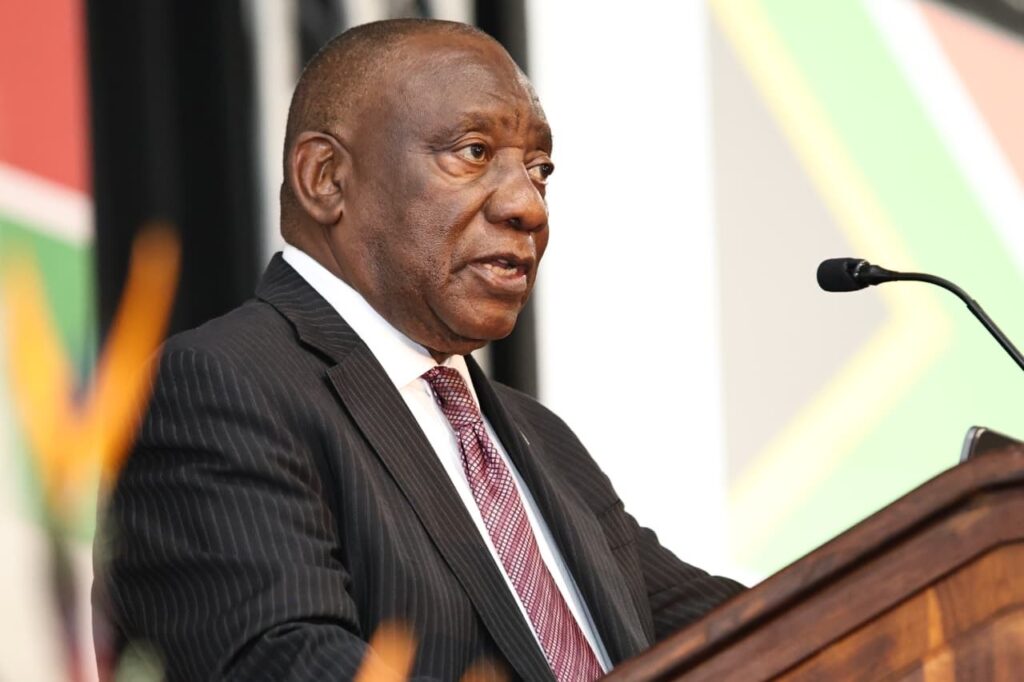
President Cyril Ramaphosa has called for calm and unity while outlining a tougher approach to illegal immigration.
The measures include stricter border controls, stronger enforcement of labour laws and new steps to modernise South Africa’s immigration system.
He said the debate on migration has become increasingly prominent across the country, particularly in communities under pressure from unemployment, poverty, service delivery challenges and rising economic strain.
Over recent months, South Africans from every walk of life have raised concerns about migration and illegal immigration, he said.
“These concerns are being expressed in our communities, our workplaces, our schools, our clinics and across social media platforms,” he said.
Many citizens are asking difficult but legitimate questions about border security, jobs and pressure on public services, he added.
Concerns are also being raised about safety, security and the rule of law.
“These concerns are real. They deserve to be heard. They deserve to be addressed,” he said.
Government, he said, recognises rising frustration linked to unemployment, especially among young people, poverty and lack of opportunity.
Illegal immigration should not be blamed for all economic challenges, the President said, pointing instead to deeper structural issues in the economy.
The solution lies in faster economic growth, greater investment, industrial expansion, infrastructure development and the creation of millions of new jobs, he added.
Migration is a global issue, and South Africa, like many countries, is a product of migration, which contributes to its diversity and vibrancy.
The country also has international and constitutional obligations to protect people fleeing wars, conflict, discrimination and violence.
Ramaphosa said at the same time, every country has laws that determine who may enter, work, trade and remain within its borders.
The basic principle is that every person within South Africa should be here legally, he said.
“Anyone who works or runs a business must be legally permitted to do so.” Ramaphosa said.
The challenge, he said, is that some people are in the country irregularly, while enforcement weaknesses, system gaps, corruption and declining public confidence have contributed to the problem.
South Africans are entitled to expect better, and government accepts that responsibility.
Ramaphosa said only authorised officials may act against immigration violations, and no person is allowed to confront others in the street to demand proof of nationality, he stressed.
Communities were also warned against xenophobia, racism, sexism, Afrophobia and all forms of intolerance, with no space for such behaviour in the country.
People should not be influenced by misinformation, fake news or social media campaigns spreading false narratives about foreign nationals, he added.
“Illegal migration, if left unchecked, poses a risk to South Africa’s security, stability and economic progress. It also places pressure on public services such as health care and education,” he said.
Ramaphosa said Organised crime networks are increasingly exploiting undocumented migration routes, including trafficking, extortion, illegal mining, drug trafficking and money laundering.
Adding that undocumented migration is also being exploited by employers who hire vulnerable workers, often paying below minimum wage and subjecting them to poor conditions.
He said such employers undermine labour standards, fair competition and opportunities for South Africans, and stronger penalties will be enforced.
Many communities have raised concerns about foreign nationals operating spaza shops and informal trading businesses, arguing that South Africans are being excluded from local economic opportunities.
These concerns, he said, must not be dismissed. Government has a responsibility to support local enterprise, promote fair competition and ensure inclusive participation in the economy.
He said Cabinet has adopted a comprehensive migration management approach endorsed by the President’s Coordinating Council, involving all spheres of government and traditional leadership structures.
Five key intervention areas were outlined.
The first is a crackdown on violations of immigration, labour and other laws, with intensified enforcement by Home Affairs, the Border Management Authority, SAPS and the Department of Employment and Labour.
Over 450,000 attempts to enter South Africa illegally were intercepted and stopped by the Border Management Authority in the past year.
Government is increasing labour inspections and has begun recruiting 10,000 labour inspectors to strengthen enforcement.
Dedicated immigration courts will be established to speed up deportation processes.
Penalties for employers who hire undocumented workers will be increased, including imprisonment rather than fines alone.
The second priority is strengthening border security through investment in modern technology, infrastructure and personnel, while still facilitating legitimate trade and travel.
Refugee reception centres will be relocated closer to border posts, starting with Tshwane, to improve efficiency and asylum processing.
The third priority is addressing corruption in the immigration system, with officials involved in selling documents or facilitating illegal entry facing dismissal and prosecution.
A biometric population register will be introduced, forming the basis for a digital identity system.
Green ID books will be phased out, and identity verification systems strengthened to prevent identity theft and syndicate abuse.
Abuse of Traffic Registration Numbers will also be stopped through new regulations to be issued by the Department of Transport within three months.
The fourth priority is legal and policy reform.
The National Labour Migration Policy will introduce quotas for the employment of foreign nationals and strengthen enforcement against employers who hire undocumented workers.
The Employment Services Amendment Bill has been approved by Cabinet and will allow the Minister to set employment quotas by sector or occupation.
Registration of small and informal businesses will be strengthened, supported by the Spaza Shop Fund in partnership with the Department of Small Business Development and local government.
The fifth priority is strengthening cooperation with countries across the continent.
Envoys will be sent to several African countries to engage in coordinated migration responses.
Migration pressures, he said, cannot be addressed through enforcement alone but require peace, economic growth and opportunity across Africa.
Ramaphosa said South Africa will continue working through SADC, the African Union and bilateral channels to find sustainable solutions.
Migration, he said, is a continental and global phenomenon that must be managed in a way that balances security, dignity and development.
The country will continue to attract tourists, skilled workers and investment through lawful channels while enforcing immigration laws firmly, he added.
Ramaphosa concluded by urging rejection of violence, intimidation and xenophobia, while upholding the Constitution and rule of law.
“We can protect our borders while protecting human dignity,” he said.
“We can enforce our laws while upholding our Constitution,” Ramaphosa.