Yasmin Bilal
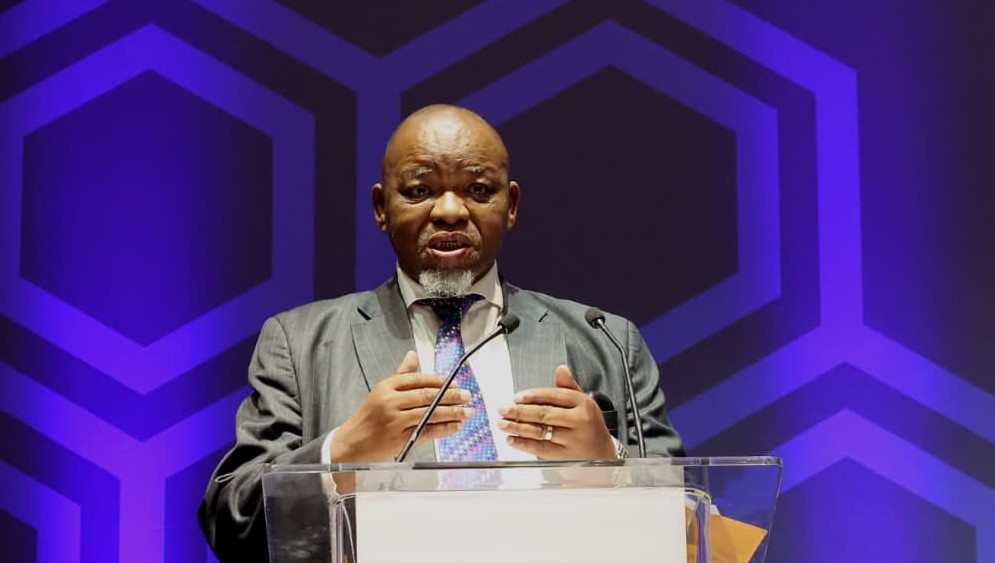
Energy security, fuel stability and regulatory compliance dominated discussions at the Fuel Industry Imbizo, where government and industry leaders met to assess challenges in the petroleum sector.
Minister of Mineral and Petroleum Resources Gwede Mantashe said global instability continues to place pressure on energy markets and fuel supply chains.
“This Imbizo comes at a critical period for the petroleum sector, both globally and domestically,” he said.
He pointed to geopolitical conflict as a key driver of volatility.
“The ongoing conflict in the Middle East has once again reminded us that energy security cannot be taken for granted,” he said.
Mantashe said events outside the country continue to affect fuel pricing, supply chains and investment decisions.
“Events occurring thousands of kilometres away continue to affect fuel prices, supply chains, investment decisions, and economic stability across the globe,” he said.
He said the country has managed to maintain fuel supply stability despite global pressures.
“While we have not been immune to these developments, we have maintained fuel supply stability,” he said.
He credited cooperation between government and industry for ensuring a consistent supply.
“I would like to thank the industry for working with the government to ensure that fuel supplies remain sufficient to meet domestic demand,” he said.
However, he raised concerns over pricing practices by some operators.
“We remain troubled by incidents where some operators increased fuel prices ahead of official price adjustments,” he said.
He warned that non-compliance undermines trust in the sector.
“Compliance with regulatory requirements is not optional. It is fundamental to maintaining public trust and ensuring a level playing field for all participants,” he said.
Mantashe also raised concern over illegal fuel blending, particularly diesel mixed with illuminating paraffin.
“Equally concerning is the continued adulteration of fuel products, particularly the illegal blending of diesel with illuminating paraffin,” he said.
He said the practice damages equipment, distorts markets and threatens economic stability.
“This criminal activity undermines the rule of law, distorts markets, damages equipment, compromises consumer confidence, and poses significant risks to the economy and national security,” he said.
He said government is working with law enforcement, but industry cooperation remains essential.
“Government continues to work closely with law enforcement agencies to combat this illicit trade. However, we cannot succeed alone,” he said. “Industry cooperation remains essential in identifying offenders and strengthening compliance throughout the value chain.”
Mantashe said the energy transition must be managed in a balanced and practical way.
“Energy transition is not about abandoning one energy source in favour of another,” he said. “It is about building a diversified and resilient energy mix that supports economic growth, industrial development, energy security, and environmental sustainability.”
He said conventional fuels will remain part of the energy mix for decades.
“Conventional fuels will continue to play an important role in the economy for decades to come,” he said.
He highlighted biofuels as a key area for investment and rural development.
“The development of a sustainable biofuels industry has the potential to support agricultural development, create employment opportunities in rural communities, stimulate new investment, and contribute meaningfully to the reduction of greenhouse gas emissions,” he said.
Mantashe said government support for the sector is growing through engagement with the agriculture portfolio.
“We have engaged with the Minister of Agriculture, who has expressed strong support for the biofuels programme,” he said.
He said regulatory reforms are underway to modernise the downstream petroleum sector.
“The Petroleum Products Bill seeks to strengthen regulation, support economic transformation, promote cleaner fuel standards, improve market efficiency, and provide greater certainty for investors,” he said.
He added that upstream petroleum regulation is nearing implementation.
“The Act and its regulations will establish a dedicated regulatory framework for the upstream petroleum sector, that is distinct from mining, thereby creating a more appropriate and investment-friendly environment,” he said.
He said energy security remains a national priority, and strategic stocks are being strengthened.
“The policy proposes a mixed stockholding model under which the South African National Petroleum Company will maintain strategic reserves equivalent to 60 days of net imports in both crude oil and refined products,” he said.
Mantashe said the country must reduce dependence on imported refined fuel products.
“If we are serious about improving energy security, reducing vulnerability to external shocks, and strengthening economic sovereignty, then we must accelerate exploration and development of our own oil and gas resources,” he said.
He added that the country cannot remain a passive price taker in global markets.
“South Africa cannot indefinitely remain a price taker in global energy markets,” he said.
He said LPG expansion is also important for household energy access.
“Our mission is to ensure that every South African household has access to LPG as a viable energy option,” he said.
Mantashe said regional cooperation should be strengthened within SADC to improve energy trade.
“We should strengthen regional cooperation, expand fuel trade opportunities, and pursue joint sourcing arrangements that benefit both the country and our neighbouring countries,” he said.
He concluded by calling for cooperation between government and industry.
“Let us use this Imbizo to identify practical solutions, strengthen partnerships, unlock investment, and build a petroleum sector that is secure, competitive, transformed, and capable of supporting developmental objectives,” he said.