News Desk Reporter
Venezuela has been struck by twin earthquakes that caused widespread destruction across northern coastal regions, damaging buildings, infrastructure and critical services.
The death toll has climbed to more than 1,400, according to ongoing assessments.
Rescue teams continue operations in the worst-affected areas. Access is gradually improving to isolated and hard-to-reach communities. Officials have warned that the number of fatalities may still rise.
The earthquakes struck on Wednesday, 24 June, in the northern coastal region along the Caribbean coastline. The tremors hit within seconds of each other.
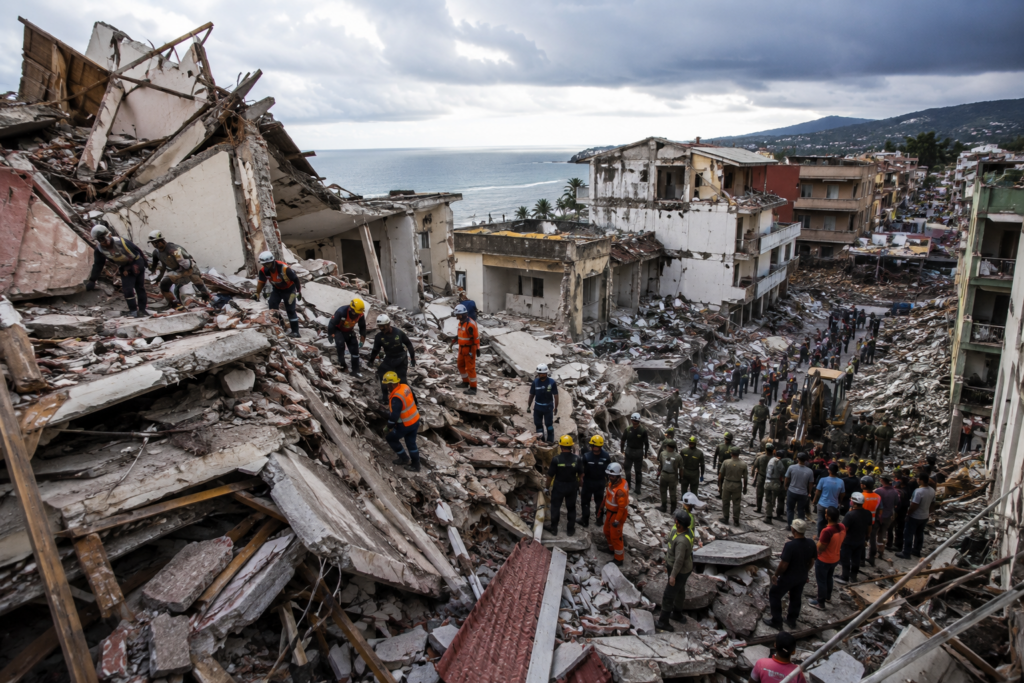
They triggered powerful shaking across coastal and inland areas. Entire neighbourhoods were left severely damaged as buildings collapsed and panic spread among residents.
International rescue teams have begun arriving in the country. They are supporting local emergency services in search and recovery operations. Efforts are focused on locating survivors trapped under rubble and providing urgent assistance to displaced populations.
The tremors caused extensive structural damage across towns and cities in the northern coastal belt. Landslides have also been reported in several affected areas, further complicating access and recovery efforts.
Large parts of the impacted regions are experiencing prolonged power outages, while communication networks have been severely disrupted. This has made coordination and contact with some communities increasingly difficult.
Several settlements remain cut off due to damaged roads and blocked routes. Emergency access is limited in these areas, slowing the delivery of humanitarian assistance and essential supplies.
Temporary shelters have been set up for displaced residents as hospitals continue to operate under significant pressure. Medical facilities are treating large numbers of injured people, many reported to be in critical condition.
Search and rescue operations are continuing around the clock. Teams are working in unstable conditions. Heavy machinery is used where possible. Manual searches continue in areas considered too dangerous for equipment.
Access constraints are limiting the full assessment of damage across all affected regions. Some locations remain difficult to reach.
International assistance has been deployed from several countries, including urban search and rescue units, medical teams and emergency supplies. Coordination is being managed through centralised structures to improve efficiency on the ground.
Residents have described scenes of sudden panic as buildings collapsed during the shaking.
Many communities remain without electricity, clean water and reliable communications in the aftermath of the disaster.
Relief efforts are being intensified alongside plans to restore essential services. Recovery is expected to take time due to the scale of destruction across multiple provinces.
Humanitarian organisations have called for increased international support, warning that thousands of people remain in urgent need of shelter, food and medical care.
Rescue teams say operations will continue until all accessible areas have been thoroughly searched. While hope of finding survivors is diminishing in some locations, efforts remain ongoing.
The disaster is now regarded as one of the most severe seismic events to hit Venezuela in recent years.