Yasmin Bilal
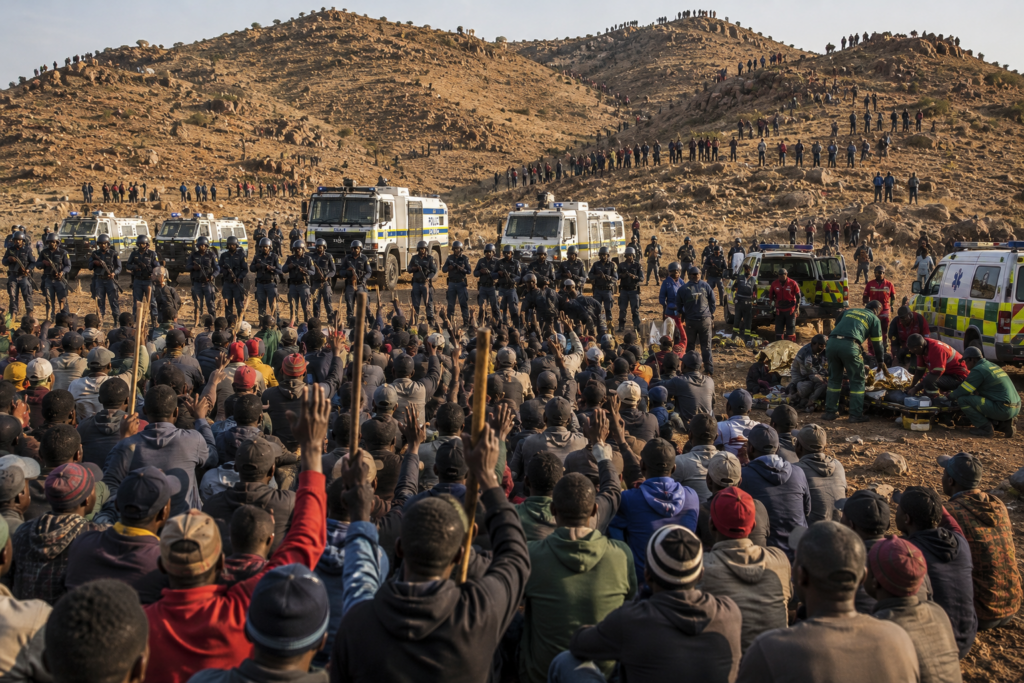
Today marks 14 years since 34 striking mineworkers were killed by police at Marikana in the North West.
The shootings took place on 16 August 2012 at Lonmin’s platinum operation after days of violence linked to a wage strike. The mineworkers were demanding a monthly wage of R12,500.
Thirty-four mineworkers were killed, and 78 were injured during the police operation. About 250 people were arrested. Ten other people had already been killed in the days before the shootings, including six mineworkers, two Lonmin security guards and two police officers.
The Socio-Economic Rights Institute of South Africa (SERI), a public interest law centre and human rights organisation representing affected families, said families and survivors were still waiting for justice.
SERI raised concerns about the lack of successful criminal prosecutions arising from the police shootings.
Nine police officers were charged in cases connected to the wider Marikana events. All were acquitted.
Four officers were acquitted in 2021 in a case concerning the death of mineworker Modisaotsile van Wyk Sagalala. Six officers were later acquitted in 2024 in a separate case relating to the events of 13 August, when three mineworkers and two police officers were killed.
Following the 2024 acquittals, the National Prosecuting Authority indicated that it would reinstate the matter and conduct a formal inquest.
SERI said there was still no clear update on the status of that process. It called on the NPA to provide families with information on outstanding prosecutions and explain the next steps.
The organisation also called for non-prosecution certificates where the NPA does not intend to proceed, allowing affected families to consider private prosecutions.
Compensation has also formed a significant part of the aftermath.
SERI said approximately R352 million had been paid in civil claims involving injured survivors, unlawfully arrested mineworkers and families of those killed.
Of the 36 families represented by SERI, 34 had received about R71 million in loss-of-support payments. The families collectively represent more than 300 dependants.
SERI said these payments did not settle all the civil claims and that more than 120 people from the families it represents had received no compensation.
It also raised concerns about outstanding claims involving psychological trauma and other damages. Two of the 36 families it represents were still awaiting resolution of their claims, according to the organisation.
The Marikana Commission of Inquiry was appointed by then President Jacob Zuma on 23 August 2012 and chaired by retired judge Ian Farlam.
The commission investigated the circumstances surrounding the deaths, injuries and arrests during the violence. It examined the conduct of the police, Lonmin, organised labour and government departments.
Its findings raised serious concerns about the police operation and the planning and decisions that preceded the 16 August shootings.
President Cyril Ramaphosa was a director and shareholder of Lonmin in 2012. His correspondence with Lonmin executives and government officials was presented to the commission.
The Economic Freedom Fighters (EFF) have renewed their criticism of Ramaphosa’s role at the company. The party argues that he should account for his role in the events and has called for an apology to the families and survivors.
SERI has also called for a formal presidential apology to the Marikana families. It said Zuma and Ramaphosa had previously undertaken to apologise, but that no formal apology had been delivered.
The EFF has used the anniversary to highlight the circumstances that led workers to demand higher wages.
The party said the R12,500 wage demand remains relevant while unemployment and the cost of living continue to put pressure on working-class households.
It has also connected its Marikana message to the upcoming local government elections, saying its campaign will focus on jobs, basic services and opportunities for local businesses.
SERI has highlighted the ages of those killed, saying 18 of the 34 mineworkers were between 23 and 34 years old.
The organisation has also drawn comparisons between Marikana and the 1976 Soweto uprising in discussing the use of state force against young Black people.
For the families of the 34 mineworkers, 16 August remains a day of remembrance.
Fourteen years after the shootings, outstanding prosecutions, compensation claims and calls for accountability remain part of the aftermath of the Marikana tragedy.