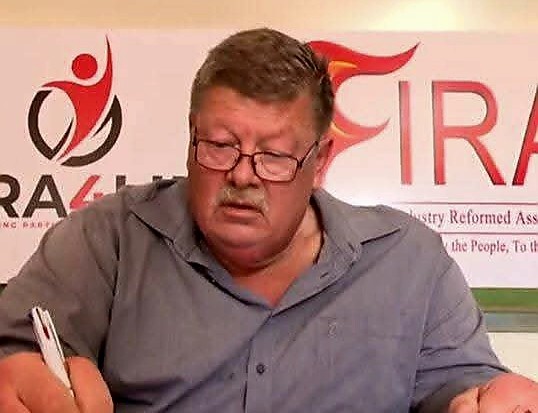
Johan Rousseau: President of the Funeral Industry Reformed Association.
South Africa needs to have an uncomfortable conversation about who is responsible for regulating the funeral industry.
More importantly, who is protecting families at one of the most vulnerable moments of their lives?
I have worked closely with the funeral industry and have seen practitioners raise the same concerns for years. They have called for meaningful regulation, proper representation, accountability and a comprehensive national regulatory framework.
Yet many of these concerns remain unanswered.
If the reported 87% public support for regulating the funeral industry through the National Consumer Commission (NCC) is accurate, where is the measurable response?
Has that public mandate genuinely been considered? Or has it effectively been set aside?
These are legitimate questions in a constitutional democracy.
We also need to revisit our history.
There was a historical petition to the late President Nelson Mandela, originally associated with GAFUA and subsequently SAFPA Gauteng. We need to ask what became of the concerns contained in that petition.
Were they ever properly resolved? Or have they simply moved through successive Government structures without a definitive solution?
If many of today’s concerns have existed for decades, we must ask whether the current approach is addressing the underlying problem.
Representation is not statutory regulation.
An industry association can represent members, participate in consultation and develop voluntary standards. But an organisation without an independent statutory mandate cannot effectively regulate an entire industry.
Proper regulation requires clearly defined powers, independent oversight and transparent enforcement. It also requires safeguards against conflicts of interest.
Most importantly, the regulator must be accountable to the public as well as the industry.
Regulatory fragmentation is affecting both funeral practitioners and consumers.
Businesses face inconsistent municipal requirements, different approaches to enforcement, rising compliance costs and operational challenges involving removals, storage and PPE.
There are also concerns about nationally consistent standards, delays in resolving complaints and uncertainty over who ultimately carries responsibility for enforcement.
These are not simply industry problems.
They become consumer problems.
A grieving family should not have to navigate municipal regulations, consumer legislation, financial services rules, mortuary requirements and dispute mechanisms simply to understand their rights.
They need answers.
They need assistance.
And they need it quickly.
That is why self-regulation cannot become a substitute for effective Government regulation.
The funeral industry is too important and too sensitive for that.
I have also repeatedly called for a dedicated Funeral Industry Ombudsman.
It should be independent, accessible, impartial and professionally competent.
Funeral services are unlike ordinary commercial transactions. Death does not operate according to office hours.
Funeral practitioners operate around the clock. Families often need immediate assistance while dealing with grief, trauma and financial pressure.
A dedicated Ombudsman should protect consumers while ensuring legitimate funeral practitioners are treated fairly.
Consumer protection and the protection of legitimate businesses should not be competing objectives.
A good regulatory system should deliver both.
We must also ask whether regulatory levies are producing measurable outcomes.
This is not an allegation of wrongdoing. It is a question of transparency and public accountability.
Where businesses contribute through levies, there should be clarity about what is collected, why it is collected and what measurable consumer protection is being achieved.
South Africa needs a coherent national approach to funeral industry regulation.
We need independent statutory regulation, nationally consistent standards and transparent enforcement.
We need effective consumer protection.
We also need protection for legitimate funeral practitioners.
And we need clear lines of responsibility between Government departments and regulatory bodies.
If Government believes the current system is working, then show us the outcomes.
Show us the enforcement.
Show us how complaints are resolved.
Show us how consumers and legitimate businesses are protected.
That is not an attack on Government.
It is a call for accountability.
Families deserve dignity.
Consumers deserve protection.
Funeral practitioners deserve fairness.
The concerns raised over decades must not disappear into bureaucracy.
They must be heard.
They must be answered.
And where reform is necessary, it must be acted upon.