Yasmin Bilal
Motorists will receive temporary relief at the pumps after Finance Minister Enoch Godongwana announced fuel levy reductions worth R10 billion.
The intervention is intended to ease pressure on households and businesses as global oil prices rise.
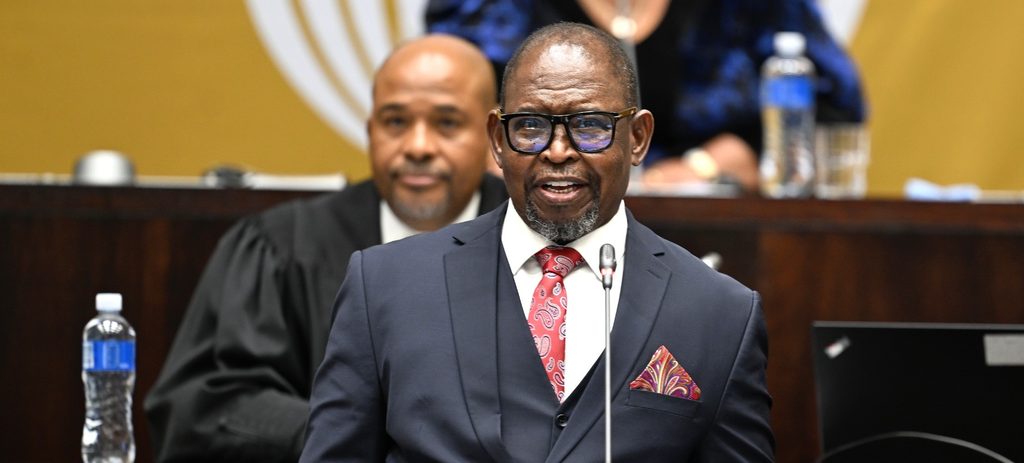
Delivering the Medium-Term Budget Policy Statement in Parliament today, Godongwana said the diesel levy would be reduced by R3 a litre and the petrol levy by R1.50 from 4 November to 1 December 2026.
The relief will continue at lower rates until 5 January 2027. The diesel levy will then be reduced by R1.50 a litre and the petrol levy by R1.
“These measures will provide R10 billion in support, at a fiscal cost of R10 billion in foregone revenue,” he said.
Godongwana said the R10 billion transferred to the Central Energy Fund to finance the relief would be returned to the National Revenue Fund and placed in the Contingency Reserve.
The intervention comes as geopolitical conflict has pushed up global oil prices and increased the cost of living for households and businesses.
Godongwana said Israel and the United States attacked Iran shortly after the Budget was tabled in February. The conflict led to the closure of the Strait of Hormuz, a vital corridor connecting oil suppliers in the Middle East to the rest of the world.
Interruptions to global oil supplies have caused prices to rise sharply, particularly for food and energy. Borrowing costs, including those facing South Africa, have also increased.
Global economic growth is now estimated at 3.1% in 2026, down from the 3.3% projected in January.
South Africa’s growth outlook has also weakened. Godongwana said government now forecast real economic growth of 1.2% this year, down from the 1.6% projected in February.
Growth is expected to reach 1.6% in 2027 and 2% by 2029. A prolonged conflict in the Middle East, alongside El Niño and its likely impact on producer costs and output, could further weaken domestic growth.
Economic activity has already lost momentum, particularly in export-linked sectors. However, fiscal discipline and a lower inflation target are helping to contain borrowing costs and reduce South Africa’s risk premium.
Godongwana said the rand had strengthened and become less volatile, reflecting efforts to preserve macroeconomic stability and fiscal sustainability.
However, he warned that economic growth remained too low.
“If we stay the course, growth could exceed 3 per cent per annum,” he said.
Godongwana said government’s strategy for faster growth and healthier public finances rested on four pillars: maintaining macroeconomic stability, implementing structural reforms, building state capability and supporting growth-enhancing infrastructure.
He said years of State Capture, the Covid-19 pandemic, low economic growth, rising expenditure and mounting debt had brought the country close to a fiscal crisis.
Government had since limited bailouts to state-owned entities, funded new commitments responsibly and prioritised investment over unsustainable consumption.
The minister said debt as a percentage of gross domestic product was now falling, creating a stronger foundation for investment, growth and job creation.
He also pointed to positive rating actions by all three major global credit rating agencies earlier this year, despite a challenging global environment.
South Africa’s debt-to-GDP ratio stabilised at 78.4% in the 2025/26 financial year, the first time in nearly two decades.
The primary surplus, which measures government revenue against spending excluding interest payments, is expected to rise from 1.7% of GDP this year to nearly 3% by 2030.
The budget deficit is forecast to narrow to 3.9% of GDP in the current financial year, compared with the 4% forecast in February. Government expects the deficit to fall to 2.5% of GDP by 2030.
To protect these gains, government released draft fiscal anchor legislation for public comment in October. The legislation is expected to be tabled in Parliament in 2027.
The proposed framework would require each administration to commit to its own fiscal objectives, consistent with its electoral mandate. It would also have to report on progress at every Budget and explain any significant deviation to Parliament.
The Financial and Fiscal Commission would independently assess whether the fiscal framework was consistent with the administration’s fiscal plan.
Godongwana said the revenue outlook for 2026/27 was stronger than expected, with gross tax revenue revised upwards by R17.1 billion compared with the February estimate.
The improvement was mainly due to higher collections from corporate tax, dividends tax and VAT. However, he warned that much of the increase reflected higher commodity prices and was expected to dissipate over the medium term.
Gross tax revenue is projected to increase from R2.14 trillion this year to R2.53 trillion in 2029/30.
The South African Revenue Service continues to strengthen revenue administration and improve compliance. It is also working to combat illicit trade, particularly in alcohol and tobacco.
Its efforts include enhanced cargo scanning, tracking capabilities and stronger enforcement to disrupt networks involved in illicit trade.
Government has identified further savings to reduce waste and improve the quality of spending.
Alongside the R12 billion identified in the 2026 Budget, a further R38.1 billion has been identified over the 2027 medium-term expenditure framework period.
The savings include R11.7 billion from low-priority programmes, reduced duplication and administrative inefficiencies in national departments. A further R13 billion is expected from reducing social grant fraud.
Another R7.8 billion has been identified from the human settlements development grant, where inefficiencies mean less money is spent on building houses. Surpluses in public entities account for a further R5.5 billion.
Godongwana said the additional revenue would allow government to increase expenditure by R45.5 billion in 2026/27 compared with the February Budget.
The adjustments include R6.2 billion for unforeseen and unavoidable expenditure, mostly disaster relief and rehabilitation. A further R1.9 billion has been rolled over from the previous financial year, while R4.3 billion is for self-financing expenditure.
An additional R823 million has been allocated to the South African National Defence Force for troop deployments to assist police in fighting gang-related crime and combating illegal mining.
The Madlanga, Khampepe and Nkabinde commissions of inquiry will receive R516 million.
The Special Appropriation Bill includes allocations to Parliament and funding for continued healthcare services for retired members of the South African National Defence Force.
Additional funding has been provided to strengthen the capacity of the Border Management Authority and accelerate SARS’s modernisation programme. It will also improve SARS’s information and communications technology infrastructure, system availability and cyber resilience.
Government has allocated R150 million to strengthen the technical capacity of the digital services unit developing the MyMzansi app. The platform is intended to allow citizens to access government services through a single digital interface.
The Contingency Reserve will increase to R10 billion to respond to potential threats associated with El Niño and other risks. A further R20 billion has been earmarked for infrastructure projects being evaluated through the Budget Facility for Infrastructure.
Government is also providing for early retirement and voluntary exit packages for public servants. The measures are intended to rejuvenate the public service and save an average of R4.4 billion a year to address pressure on public sector employee compensation.
Consolidated government expenditure is expected to grow by an average of 3.6% a year, from R2.7 trillion to R3 trillion by 2029/30. Payments for capital assets are projected to grow by 5.3% annually.
Infrastructure remains central to government’s growth strategy. The Infrastructure Finance and Implementation Support Agency began operating on 1 April 2026.
The agency brings infrastructure advisory services, project preparation and financial structuring together. It is already supporting projects across all spheres of government with a potential investment value of more than R217 billion.
Government is also fast-tracking public-private partnerships, particularly in municipalities where infrastructure backlogs and service delivery pressures are most severe.
Of the 68 projects currently in the public-private partnership pipeline, 31 are municipal projects. Amended Municipal PPP Regulations have been submitted to Parliament for the required 30-day scrutiny period.
The regulations are intended to simplify processes, reduce transaction costs and make it easier for municipalities to partner with the private sector to deliver infrastructure and services.
The Budget Facility for Infrastructure has approved more than R100 billion in fiscal support. An infrastructure bond has raised more than R14 billion since its first issuance in December 2025, with the funds earmarked for projects in the facility’s pipeline.
Government has also completed a review of infrastructure grants to provinces and municipalities. Between 2017/18 and 2023/24, national government transferred R887 billion through these grants.
The review found that although most funds were spent, projects were often delayed, left incomplete or failed to deliver their intended benefits.
Government is reforming the grant system to strengthen planning, accountability and oversight. The aim is to ensure that transferred funds result in completed projects, functional infrastructure and reliable services.
The Credit Guarantee Vehicle, which aims to mobilise private capital for infrastructure, was incorporated in August 2026 and has applied to the Prudential Authority for an insurance licence.
Development partners, including the World Bank, have made conditional commitments of US$553 million towards its capitalisation. The vehicle is working towards becoming operational in 2027.
Godongwana also outlined changes being considered in financial-sector and tax policy.
The Unclaimed Financial Assets Centralisation Framework was published for public comment on 20 August. National Treasury received broad support for proposals to improve the tracing of beneficiaries and return unclaimed assets to their rightful owners.
Further technical work will be undertaken on the institutional, legal and operational arrangements required for a phased implementation. Draft legislative amendments are expected in 2027.
Consultations are continuing on a proposed National Online Gambling Tax. The final design is expected to be announced in the February 2027 Budget.
Government is also reconsidering draft capital flow management regulations published earlier this year by National Treasury and the South African Reserve Bank. These include the cross-border treatment of crypto assets.
After receiving thousands of comments, the two institutions intend to move away from pre-approvals and instead assess transactions for legitimacy and tax compliance.
The treatment of crypto assets will also take account of recommendations from the Financial Stability Board. Consultations will begin before a revised draft of the regulations is published for further input.
Godongwana said government remained committed to protecting the social wage, which includes health, education, social development, shelter and services for low-income households. These areas account for 60% of non-interest expenditure.
The budget funds free basic water, sanitation, electricity and solid waste management for more than 11 million households. It also supports subsidised basic education for more than 77% of school-going children, including meals through the National School Nutrition Programme.
Social grants support 18.1 million beneficiaries, including older people, people with disabilities and children.
Government has allocated R1.6 billion over the medium term for interventions focused on pre-birth care and the first 1,000 days of a child’s life. The funding is intended to address stunting and malnutrition.
A further R1.5 billion over three years will fund additional agricultural extension officers to support farming communities.
Additional funding has been allocated to address gender-based violence and femicide, following measures announced by President Cyril Ramaphosa in September.
Government will allocate R3.8 billion to employ more than 3,500 social workers to strengthen prevention efforts in response to rising murders and attacks on women. A further R186 million will go towards forensic and investigative capacity.
The number of sexual offences courts will increase from 55 to 101. Thuthuzela Care Centres, which provide support to rape survivors, will expand from 72 to 80 by 2028/29.
A further R157.4 million has been allocated to the Department of Women, Youth and Persons with Disabilities to improve national coordination and oversight of the government’s response to gender-based violence and femicide.
Government will spend R810 million next year on recapitalising the South African Police Service fleet. A further R2.2 billion over the medium term will be allocated to strengthen the independence of the judiciary.
The Financial Action Task Force’s 18-month mutual evaluation process is under way. It assesses both technical compliance with international standards and the effectiveness of their implementation.
The process examines whether laws work in practice through investigations, prosecutions and asset forfeitures.
Government is also increasing the number of labour inspectors. It is considering measures to strengthen the capacity of border inspectors and immigration officers to address illegal migration.
Godongwana said government was undertaking the first comprehensive modernisation of the Public Finance Management Act since its enactment.
The proposed reforms aim to modernise the legislation, clarify accountability, strengthen enforcement, improve state capability and support fiscal sustainability. They also draw on more than two decades of implementation experience and lessons from the Zondo Commission.
The Municipal Finance Management Act is also being modernised for the first time in 23 years.
The proposed changes focus on funded budgets, improved revenue management, clearer accountability and earlier intervention when municipalities experience financial distress. They would also strengthen revenue collection while protecting basic services for poor households.
On procurement, Godongwana said the Constitutional Court judgment invalidating the Public Procurement Act related to the parliamentary consultation process, not the substance of the law.
The judgment does not create a vacuum in procurement law. Existing legislation and regulations remain in place while the Public Procurement Bill is redeveloped.
Over the medium term, national departments will receive 47.4% of available non-interest spending, provinces 42.6% and local government 10%.
Government will add R21.8 billion to the local government equitable share to cover higher bulk costs for free basic water, sanitation, electricity and refuse removal.
A further R20.5 billion will be added to the provincial equitable share to help provinces meet rising health and education costs.
An additional R13.4 billion will be allocated through the general fuel levy, restoring metropolitan municipalities’ share to 23% over the medium term.
Godongwana said the financial and operational performance of many municipalities remained weak. This affected basic services, economic activity and public confidence.
In June, he suspended the next equitable share transfer to 69 municipalities that persistently failed to pay all their creditors.
By the end of July, 37 had concluded council-approved repayment plans, and R4.2 billion had been paid to creditors.
Government is also adding R3.5 billion over the medium term to the R2 billion already allocated for a wider rollout of smart meters. The meters are intended to improve revenue collection.
Godongwana said municipalities needed to reinvest revenue from water, electricity and waste services in the infrastructure supporting those services. They also needed to manage charges to residents more effectively.
He said the government’s review of municipal funding had found that most municipalities had enough money for day-to-day operations but spent too much on running costs. This left insufficient funding for long-term infrastructure investment and maintenance.
The final report is expected by the end of the year and will recommend a practical funding model.
Godongwana said the policy statement confirmed that public finances had stabilised despite global volatility.
“Madam Speaker, over the next three years, our task is to turn this stability into faster growth and more jobs,” he said.
“We will continue to build an economy that is more competitive and more inclusive,” Godongwana said.