News Desk Reporter
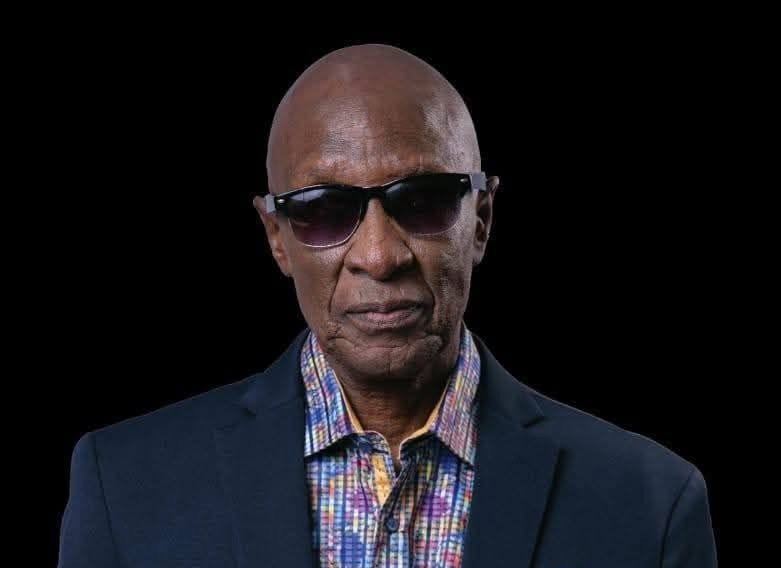
South African musician Babsy Mlangeni, whose career stretched across generations, has died following a short illness.
The Ministry of Sport, Arts and Culture confirmed his death at the age of 83.
Mlangeni, whose birth name was Bernard Mlangeni, was born in Orlando East, Soweto, in 1943.
His music career spanned almost six decades, during which he worked as a singer, guitarist and composer.
He attended the Athlone School for the Blind in Cape Town, where he learnt to play the guitar.
Mlangeni became known for songs that reflected everyday life and people’s experiences.
Among his best-known songs are Sala Emma, Bua Nnete, Thekeni, Hey Mr Taxi Driver, Mapule, Music Was Born in Africa, Botsotso, Lonely Man and Umadlembathini.
Sala Emma, which was inspired by his wife Emma, became particularly popular and reached audiences beyond the communities where he first performed.
Minister of Sport, Arts and Culture Gayton McKenzie said Mlangeni’s music had become part of the country’s collective soundtrack.
“South Africa has lost a musical giant, a pioneer and a voice that became part of the soundtrack of our lives,” said McKenzie.
Mlangeni continued to build his career while living with blindness.
McKenzie said he had challenged perceptions about what people with disabilities could achieve and helped create opportunities for younger musicians.
“He did not allow blindness to define the limits of his life or his talent. Instead, he became an example to many and helped open the door for others,” McKenzie said.
His contribution to music was recognised through several awards.
Mlangeni won the Black Music Award for Best Male Vocalist in 1975 and 1976. In 2017, he received a South African Music Awards Lifetime Achievement Award.
The Department of Sport, Arts and Culture also honoured him through its Living Legends initiative in 2024.
He remained active in the music community in his later years.
In July 2025, he performed alongside other established musicians at a tribute concert honouring the late Mama Abigail Kubeka.
Later that year, he received the Artist Living With Disability Award at the National Arts and Culture Awards, with McKenzie presenting the award.
McKenzie said the recognition was especially meaningful because Mlangeni was able to receive the award himself.
“There is something important about giving our legends their flowers while they can still smell them,” he said.
Deputy Minister of Sport, Arts and Culture Peace Mabe described Mlangeni as an important figure in the country’s creative history.
“Babsy was more than a musician. He was part of the living history of our creative sector, and his contribution helped shape the sound and cultural identity of our nation,” said Mabe.
She said his work had helped preserve stories and cultural heritage while bringing generations of South Africans together through music.
The department extended its condolences to Mlangeni’s family, friends, fellow musicians and the wider creative community.
Mabe said his music would continue to be heard after his death.
“Today, we do not only mourn a man. We mourn the passing of an era. Babsy Mlangeni’s voice may have fallen silent, but the music remains,” she said.
McKenzie also paid tribute to Mlangeni’s contribution to generations of South Africans.
“Lala ngoxolo, Babsy. Robala ka kgotso. Thank you for the music. Thank you for the courage. Thank you for showing generations of South Africans that no barrier should be allowed to silence a gift,” he said.