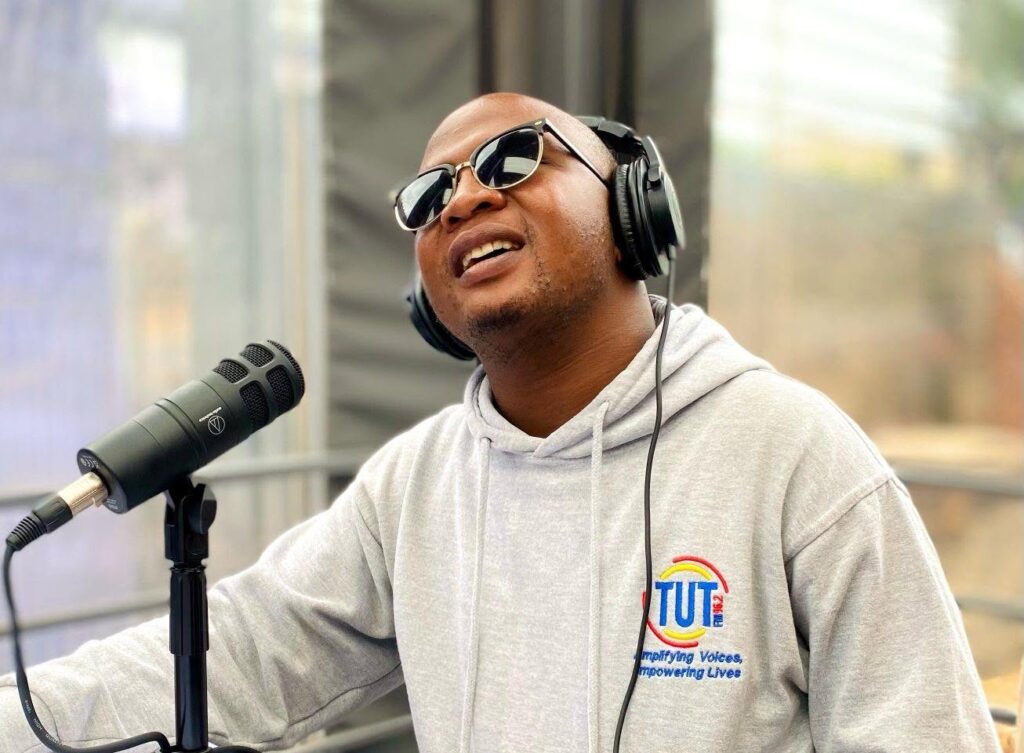
Noko Mashilo
Growing up in the rural village of Phokwane near Jane Furse in Limpopo, Calvin Kamogelo Mogajane never imagined that the radio he relied on as a blind child would one day become the platform through which he would inspire thousands of listeners.
Today, the 27-year-old presenter of Sunday Breeze on TUT FM 96.2 has transformed his visual impairment into a story of courage, determination and purpose.
This broadcaster, author and language practitioner, affectionately known as Mac Cali, the blind man behind the microphone, has become one of the most recognisable voices on community radio. He has proven that disability is never a barrier to success.
“The people with eyesight watch television, but people like us depend on radio. Radio became my world long before it became my career,” Mogajane told The News Desk.
His love for broadcasting was born from years of listening to various radio stations, particularly Thobela FM.
Among the voices that shaped his journey was broadcaster Happiness Maake. His book reviews on Moremogolo ignited Mogajane’s passion for literature and storytelling.
“I admired Happiness Maake so much that I became his carbon copy when I started presenting. I sounded exactly like him until I eventually discovered my own voice,” he recalled.
While Maake inspired him, Mogajane credits seasoned broadcaster Mathekga Senyolo for opening the doors to his radio career.
“The person who gave me my breakthrough in radio is Senyolo. He offered me an opportunity when no one else could. I eventually co-presented his programme Mid Morning Connection. He shaped my career.”
Ironically, Mogajane seldom made it onto the airwaves. In 2021, he missed the station’s presenter auditions.
Hoping for another opportunity, he approached the station manager but was informed there were no vacancies.
Senyolo overheard the conversation and offered him a 30-minute segment on his programme.
The segment, titled Tša Leago, focused on social issues. It featured interviews on topics affecting communities. One of his memorable interviews was with Fhulufhelo Rambau, who shared her experience of living with endometriosis.
His talent soon earned him a permanent role as co-host. He later joined Sunday Breeze, where he now serves as both presenter and content producer.
On Sunday Breeze between 12 midday and 3 pm every Sunday, Mogajane works alongside technical producer Prince Masilo, who ensures every broadcast runs smoothly.
“The programme focuses on love, family matters, music and celebrating ordinary people doing extraordinary things in their communities. We profile an artist of the day, spotlight community heroes and wrap up the biggest stories of the week. We play more music and less talk.”
Known for his fast-paced, non-linear presentation style accompanied by background music, Mogajane said listener engagement remains the highlight of every broadcast.
“I enjoy interacting with listeners because that’s where you learn different perspectives. Every caller teaches you something.”
Despite his success, Mogajane says blind broadcasters continue to face challenges behind the scenes.
“There is still a lack of accessible broadcasting software for blind presenters. Something as simple as scheduling an advertisement can become complicated. Even using a screen reader while you’re live on air presents challenges because you cannot hear both the screen reader and the programme at the same time.”
He also believes misconceptions about blindness continue to prevent many talented people from accessing employment opportunities.
“Some employers believe hiring a blind person is expensive and assume there are no solutions. I once applied for a position that specifically encouraged people with disabilities to apply, but I wasn’t appointed because they assumed my blindness would cost too much.”
Mogajane said stereotypes also affect personal relationships.
“Some people think being in a relationship with a blind person is a burden because they assume we cannot cook or take care of ourselves. Those assumptions are not true,” he said.
These misconceptions inspired him to write one of his upcoming books, Chronicle of a Blind Child, which addresses the myths and realities of living with blindness.
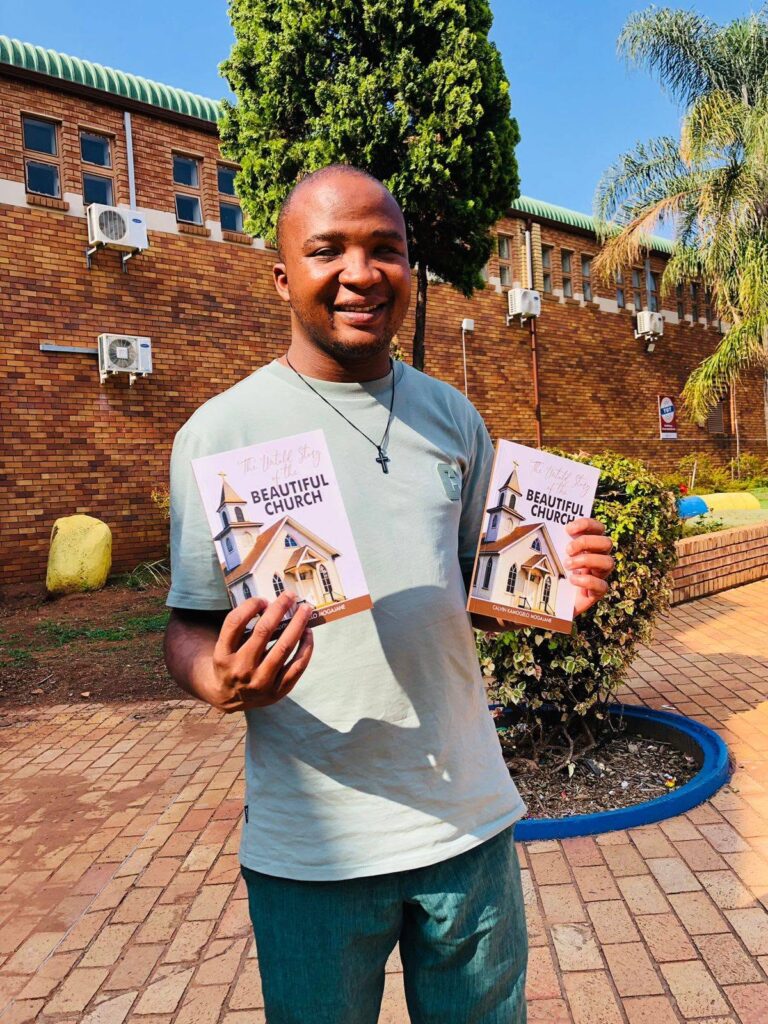
Already an accomplished author, Mogajane has published four books, including The Strong Woman and The Untold Story of the Beautiful Church. His ambition is to publish six books before turning 30.
Away from the studio, he is a qualified language practitioner who studied Applied Languages at Tshwane University of Technology. He is currently pursuing a master’s degree.
His work has earned him several prestigious accolades. These include the Lepheko Peace Foundation Award for his book Strong Woman, a Media and Communication Excellence Award at the 2024 Gauteng Disability Rights Excellence Awards presented by Gauteng Premier Panyaza Lesufi, a Language and Translation Award from the Department of Sport, Arts and Culture, and the Best Presenter Award at the 2025 Grooming Legends Awards.
For Mogajane, however, the greatest achievement is changing perceptions.
“The only disability in the world is a bad attitude. A bad attitude is like a flat tyre. You will never go anywhere until you change it,” he said.
“There is greatness inside every person. You become the product of your decisions rather than the victim of your circumstances. Success comes from pain, pain comes from trying, trying comes from having a vision, and vision begins with a person.”
He concluded with a message that reflects both his personal journey and his advocacy for disability inclusion.
“Nothing about us without us. Luck happens when preparation meets opportunity. Given the chance, blind people can do extraordinary things,” he added.