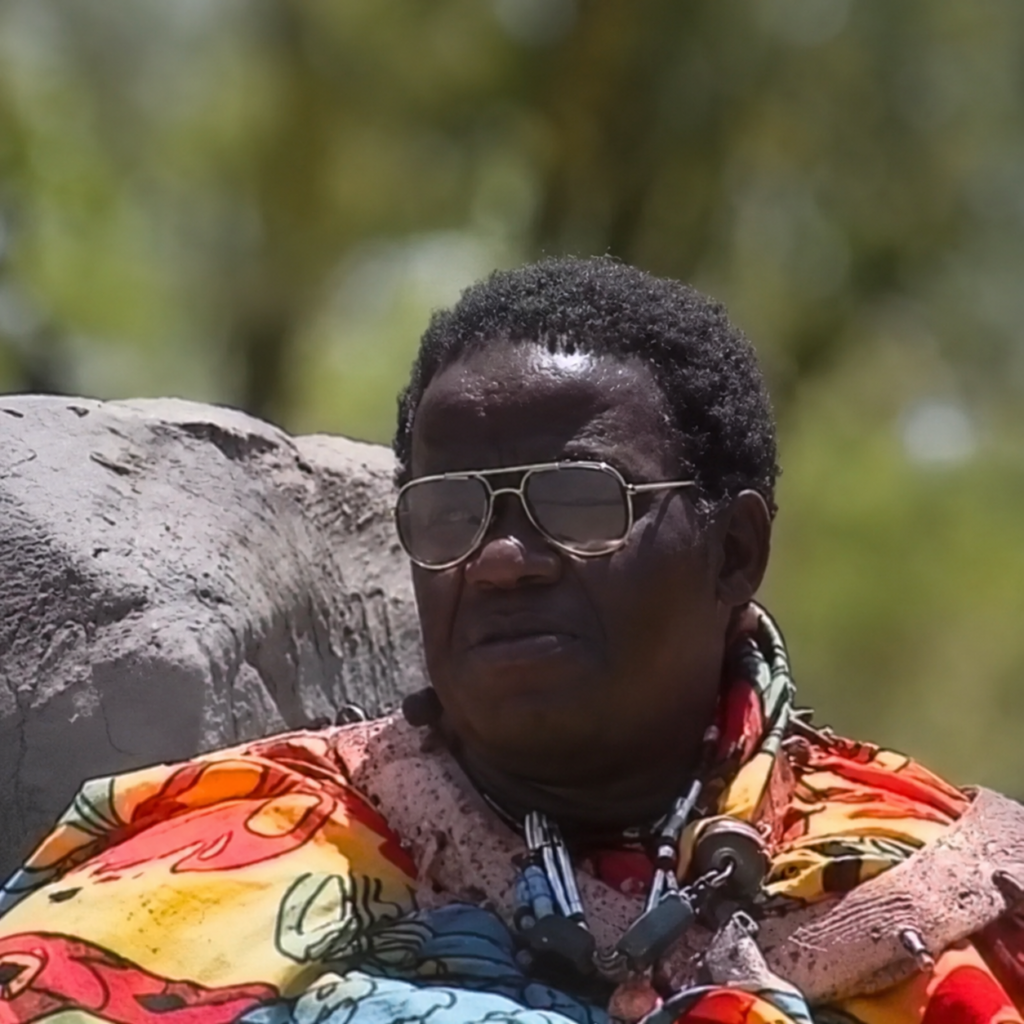
Emily Mgidi
A stark prophecy delivered by the late Credo Mutwa, a respected sangoma and sanusi, has resurfaced in public discourse, reigniting debate across South Africa more than three decades later.
The warning, made thirty-three years ago in nineteen ninety three, is once again circulating widely on social media as the country continues to grapple with tensions around immigration, identity and social cohesion.
In the prophecy, Mutwa speaks of a future marked by division and conflict, particularly within communities. He says, “The Zulus are going to be called the enemies of peace, and many are going to be destroyed. I pray for you because you do not see. You do not see that foreign murderers are at work in our country.”
The message has triggered strong reactions online, with some users describing it as a prophetic reflection of present-day realities. In contrast, others argue it should be understood within the political and social context of the early nineteen nineties, a period defined by uncertainty as South Africa moved toward democracy.
Midway through the recording, Mutwa continues his warning in forceful terms, cautioning about what he believed were emerging threats and rising societal fractures.
Political analyst Kenneth Moeng said the renewed circulation of such material reflects how historical commentary is often reinterpreted in modern political debates. “The resurgence of videos predicting or prophesying future events is often used to support particular ideological or political viewpoints,” he said.
Moeng added that Mutwa’s statements should be understood within the realities of his time rather than as literal predictions. “He was analysing the social, economic and political conditions of the early nineteen nineties and using those realities to make observations about the future,” he said.
He further noted that the continued relevance of such narratives points to unresolved structural challenges in South African society. According to Moeng, long-standing economic and social pressures continue to shape how historical voices are interpreted today.
Cultural expert Dr Oscar Esbie said premonitions should be understood as symbolic guidance rather than fixed forecasts. “Premonitions are never perfect, but they are always valid,” he said.
Esbie explained that such messages emerge from specific cultural and historical contexts and should be read with caution. “A premonition serves as a forecast, giving people an opportunity to tread carefully and use the message as guidance,” he said.
Bishop and traditional healer Patrick Chauke said Mutwa’s legacy reflects deep observation of society and human behaviour. He noted that traditional healers are trained to interpret both spiritual and social dynamics.
“Whether one believes Credo Mutwa had visions or not, his message was about social conflict, identity, and the dangers of forgetting our shared humanity. That is why many people feel his words still resonate today,” said Chauke.
He added that Mutwa’s reflections speak to long-standing patterns of division rather than isolated incidents. “When he spoke about division, conflict, and people turning against one another, he was speaking about realities that have existed for generations,” he said.
The prophecy has resurfaced amid ongoing public debate around immigration enforcement and community mobilisation linked to movements such as March and March, and Operation Dudula.
These groups have been associated with campaigns calling for stricter immigration controls and the removal of undocumented foreign nationals.
Demonstrations have been held in parts of KwaZulu-Natal and Gauteng.
These events have contributed to broader national discussions on identity, governance and social tension.
Mutwa was widely known for making a series of prophecies over his lifetime, which he linked to significant political shifts and major global events.
His warnings include the June 16, 1976, Soweto uprising, the killing of Chris Hani, and the later removal of former president Thabo Mbeki from office.
He also spoke about looming energy challenges in South Africa, including the persistent load shedding crisis, as well as the Marikana tragedy in twenty twelve.
Mutwa cautioned apartheid leader Hendrik Verwoerd about an assassination threat.
Outside South Africa, he predicted the September 11 attacks in the United States, the assassination of US President John F Kennedy, and the rise of a global HIV and AIDS epidemic years before the virus was formally identified.