News Desk Reporter
Patients in Yemen’s Taiz governorate face growing risks as hospitals struggle to provide care amid shortages of fuel, medicines and other essential supplies.
The World Health Organisation (WHO) has warned that restricted access is making it harder for health facilities to obtain the resources they need to keep operating.
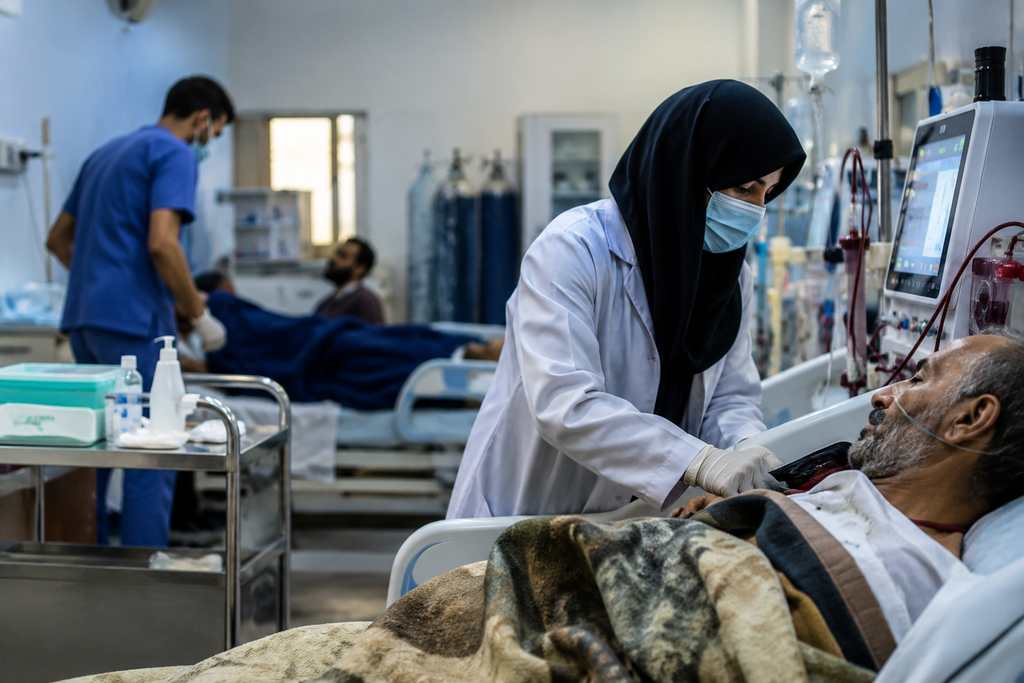
The scale of the problem is evident in the number of patients who rely on specialised care. More than 1,110 people with kidney failure need dialysis each day, while 192 patients are in intensive care. A further 154 newborns depend on incubators.
These services require reliable power, fuel, oxygen and medical equipment. Without replenishment, facilities risk being unable to maintain treatment for patients who cannot afford interruptions in care.
The pressure extends across Taiz city, where 42 health facilities have reported critical shortages of essential supplies.
Hospitals and ambulances collectively require more than 156,000 litres of fuel each month. Limited supplies threaten not only transport for emergencies but also oxygen production and refrigeration needed to preserve vaccines.
Keeping these services operational has become more difficult because communication network outages are affecting the collection of information about remaining fuel stocks and interruptions to healthcare.
WHO is working with health authorities to assess the situation and establish what supplies are still available.
Access restrictions are compounding the problem. Insecurity and road closures have hindered the movement of essential goods into Taiz, including medicines and fuel.
The disruption has also affected water provision. Water production in the city has fallen by about half, according to the United Nations, adding to the strain on communities already facing humanitarian difficulties.
Humanitarian organisations have called for safe and unhindered access to allow essential supplies to reach those who need them.
WHO has warned that replenishing fuel and medical stocks is crucial to maintaining lifesaving treatment, including emergency surgery, dialysis, intensive care and services for mothers and newborns.