Yasmin Bilal
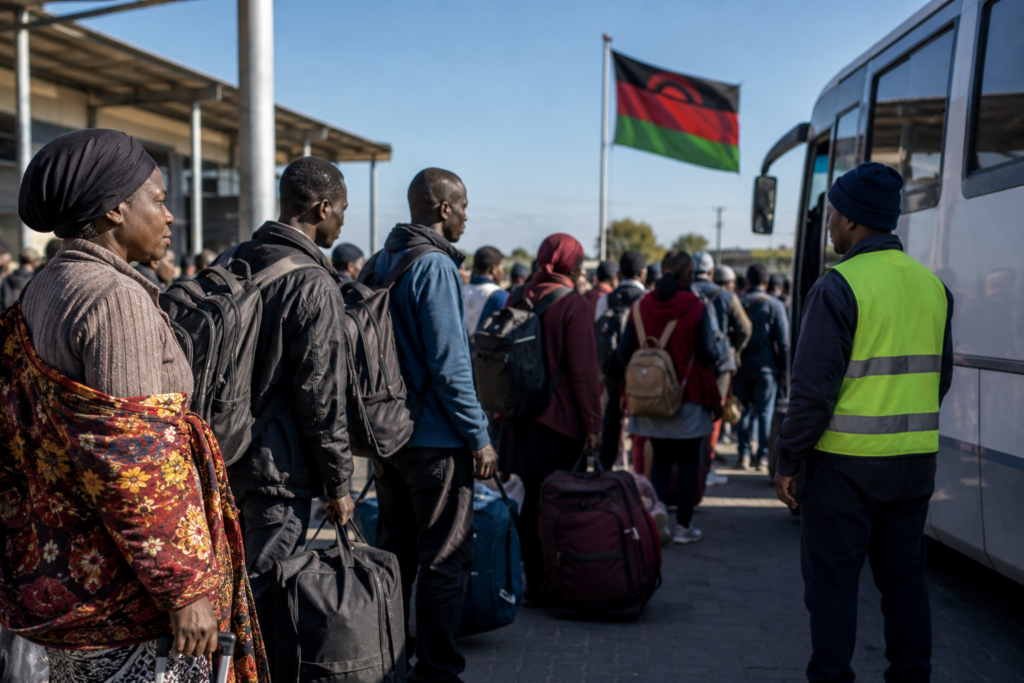
The government of Malawi has launched a voluntary repatriation programme for its citizens in South Africa following reports of safety concerns linked to vigilante activity and anti-immigrant demonstrations in some areas.
The Ministry of Foreign Affairs and International Cooperation says it has been monitoring the situation closely, citing incidents of harassment, violence and growing tensions affecting foreigners in parts of South Africa.
Malawian diplomatic missions in Pretoria and Johannesburg have been engaging with diaspora communities to assess conditions on the ground and identify those who may need consular assistance.
The ministry says it is also in ongoing contact with South African authorities. It describes the engagements as cordial and cooperative, reflecting long-standing relations between the two countries.
It further stated that South Africa has taken steps in response to concerns raised through diplomatic channels, although no details were provided.
Malawi says systems are now in place to assist those who choose to return home. Support will be coordinated through diplomatic missions and will include consular assistance and travel arrangements for those who request help.
The repatriation programme is strictly voluntary and not compulsory. It applies only to individuals who independently decide to return.
The government has urged those in South Africa to remain calm and rely on official channels for verified information, warning that misinformation could cause unnecessary panic.
Reactions remain mixed, with some expressing safety concerns while others say they intend to stay.
Grace, a 39-year-old domestic worker who is legally documented, said compliance with immigration requirements has helped her remain secure.
“I always make sure my documentation is in order. I renew my permit regularly. My employer also encouraged me to stay compliant, and I followed that advice,” she said.
Mark, who works as a gardener in Johannesburg, said he plans to return home but believes broader economic challenges remain.
“Leaving will not automatically create jobs for locals. I do gardening work, and many people here are not interested in that kind of job. I am going back home without any issues,” he said.
Another, Mwayi, 54, who has lived in South Africa for five years and is documented, said the environment has become increasingly difficult.
“I am grateful that the government is stepping in to assist us. The situation here has become uncomfortable. It feels like black Africans are being targeted. It is very disappointing,” he said.
The Ministry of Foreign Affairs reiterated its commitment to protecting citizens abroad and confirmed that diplomatic engagement with South Africa will continue as the voluntary repatriation process unfolds.
Further updates are expected as implementation progresses and more people request assistance.