Yasmin Bilal
Peaceful protests have begun in several parts of the country on the eve of nationwide demonstrations against illegal immigration expected tomorrow.
In Gauteng, gatherings took place in several areas including Benoni, Pretoria West, Crown Mines and Jabulani.
Law enforcement agencies are monitoring all identified locations as the provincial Joint Operations Centre tracks multiple sites of activity.
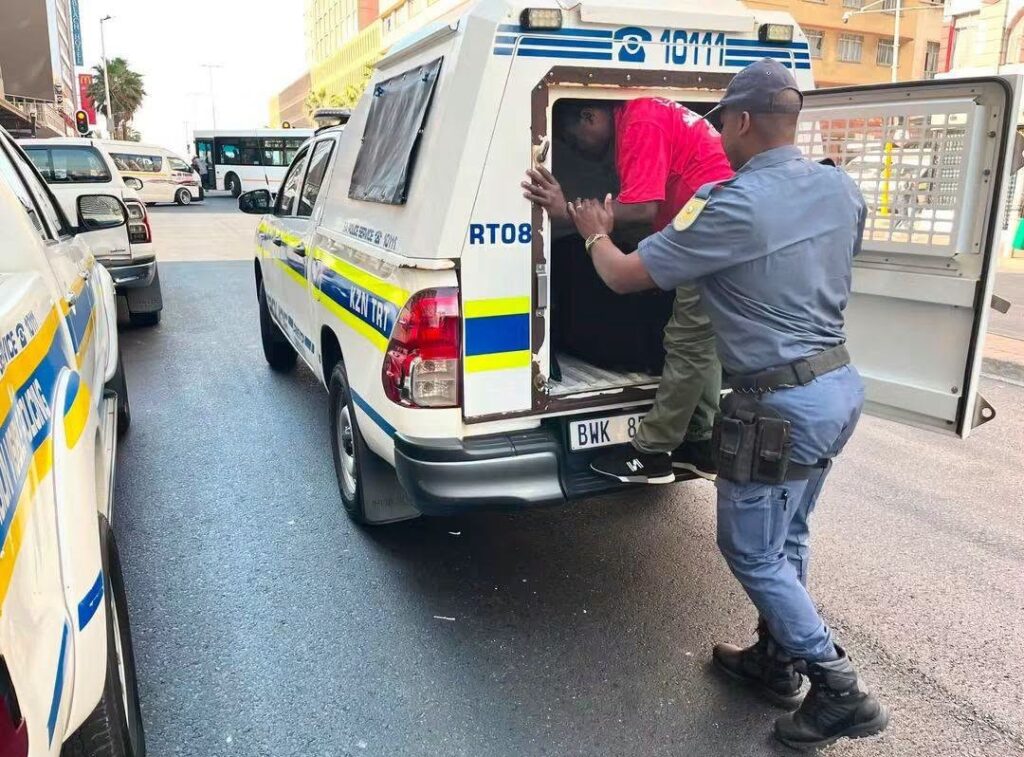
Military and police units have been deployed in Johannesburg CBD as a precautionary measure, with police securing key areas and monitoring closely.
In Soweto, large crowds of protesters gathered at Jabulani Mall, a site previously looted during the July 2021 unrest.
Residents said they were protesting against the presence of undocumented foreign nationals in their township, as well as the country.
In Protea, residents also marched in a separate gathering led by Nkosikhona “Phakel’umthakathi” Ndabandaba. The group called for stronger action against undocumented migration and increased enforcement of immigration laws.
In Johannesburg CBD, several business owners closed their shops early and removed valuable stock as a precaution ahead of the demonstrations.
Abdul, a cellphone shop owner from Bangladesh operating in Johannesburg, said it was better to be safe than sorry. “I am legal in this country, but I know what happened when people protest, they loot, so I took my stock and closed my shop,” he said.
A salon owner, Christopher from Zimbabwe in Braamfontein, said he was not taking chances. “These protestors will not care if one is legal or illegal when tomorrow comes, they will harm us and loot, so I let my staff take the day off and closed,” he said.
In Mayfair, most business owners said they would be closing their shops for the day. Although many declined to speak at length, those who did speak to The News Desk said they are legally in the country, own businesses, and have not taken jobs from anyone.
The News Desk also spoke to delivery workers who transport groceries and food across the city. Many said they will stay off duty or avoid certain areas.
A Congolese rider said most workers in the sector are foreign nationals. “I am from West Africa. Most delivery men are Africans from other countries. We don’t want problems of being attacked,” he said.
A Ghanaian rider said he would avoid certain areas. “We are not going into some places for our own safety. Not because we are illegal, but because people may not tell the difference between legal and illegal,” he said.
A Zimbabwean rider said claims of job theft were unfair. “Riding and delivering is something many locals don’t want to do. We work, earn and survive,” he said.
In Mpumalanga, organisers in Secunda have postponed a planned march to Thursday following requests to stagger demonstrations for public order management. Organisers say the aims of the march remain unchanged.
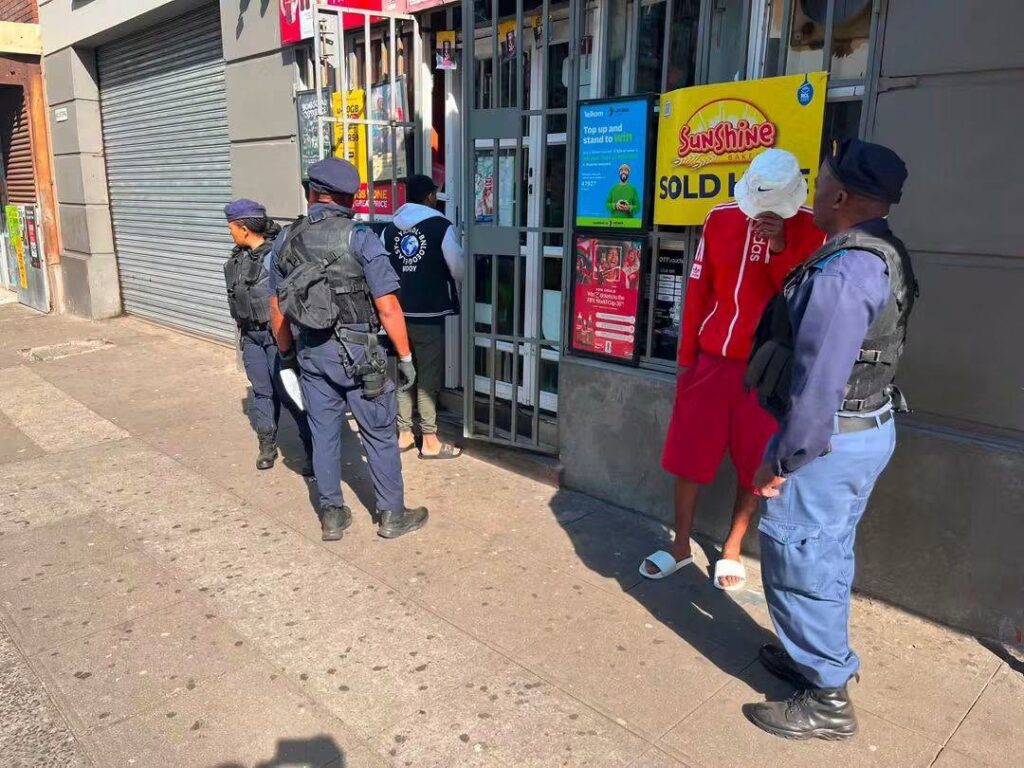
In KwaZulu-Natal, a law enforcement operation took place in Durban’s Point area targeting undocumented foreign nationals. Police and metro police carried out stop-and-search operations, with Home Affairs officials verifying immigration status.
Several businesses were closed after some were found to be operating without valid permits or being in the country illegally. Arrests were also made for drug possession.
The Road Freight Association (RFA) and the Consumer Goods Council of South Africa (CGCSA) have warned retailers and logistics operators of possible disruption linked to planned nationwide protests. They said on-demand delivery services, including Checkers Sixty60 and PnP asap, may face delays or service interruptions.
In past unrest, delivery and freight vehicles have been stopped or targeted. Checkers Sixty60 has also warned that services may not be available in some areas due to safety concerns.
Tomorrow’s protests aren’t the first to take place in the country. South Africa has experienced repeated waves of protests over the years.
Major outbreaks were recorded in 2008, 2015 and 2019, leaving dozens dead and thousands displaced.
Research by migration studies bodies, including Xenowatch and the African Centre for Migration and Society, has recorded more than 500 incidents between 1994 and 2018, with over 300 deaths and large-scale displacement.
Hotspots have included Alexandra, Diepsloot, Khayelitsha and parts of Durban. Studies link recurring tensions to unemployment, inequality, informal trade competition and weak local governance. Researchers also note that misinformation and local mobilisation can intensify outbreaks during periods of economic pressure, with migrants often scapegoated during social strain.