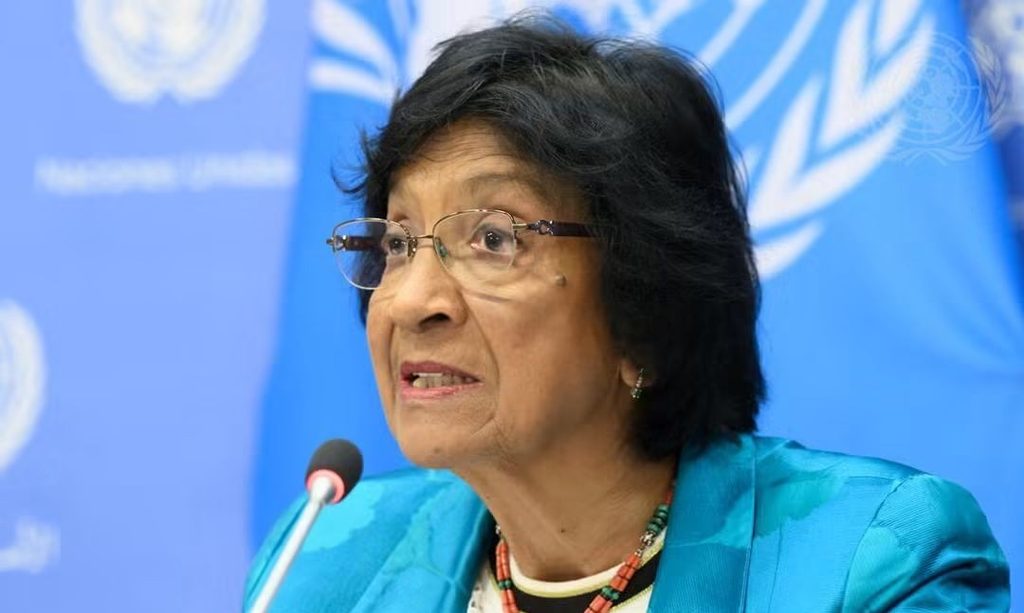
Yasmin Bilal
A landmark contribution to international criminal law has earned jurist Navi Pillay the 2026 Nobel Peace Prize.
The Norwegian Nobel Committee announced on 9 October that Pillay had been selected for her work advancing international justice and strengthening the legal framework used to hold perpetrators of serious crimes accountable.
Among the most significant developments associated with her judicial career is the recognition that rape and sexual violence can constitute crimes against humanity and genocide.
The legal breakthrough emerged from proceedings at the International Criminal Tribunal for Rwanda, where Pillay played an influential role as a judge.
She also helped advance a case in which a defendant faced charges of inciting genocide through propaganda alone, establishing an important precedent in the prosecution of those who encourage mass atrocities.
Born in Durban during apartheid to a family of Indian Tamil origin, Pillay began her legal career confronting discrimination and exclusion. She defended Nelson Mandela and other opponents of apartheid before moving into senior judicial and international human rights roles.
Her subsequent appointments included positions on South Africa’s High Court, the International Criminal Tribunal for Rwanda and the International Criminal Court. She also served as the United Nations High Commissioner for Human Rights.
Pillay chaired the UN Independent International Commission of Inquiry on the Occupied Palestinian Territory until recently. She currently serves as a judge at the International Court of Justice in proceedings in which Myanmar stands accused of genocide.
The Nobel Committee recognised her contribution to expanding the reach of international law and strengthening the institutions responsible for enforcing it. Her work has focused on the principle that individuals and states must be held accountable for their actions.
The award also comes at a time of growing concern about the effectiveness of international legal institutions. The committee warned that powerful states have often avoided accountability and that the application of international law has not always been consistent.
Although the international legal system expanded significantly after the Second World War, particularly through the creation of United Nations institutions, the committee said its shortcomings remained evident. The outcomes of cases have sometimes differed depending on the perpetrators and victims involved.
It nevertheless highlighted the role of diplomacy, treaties and judicial proceedings in resolving disputes without resorting to violence. International law, it argued, is fundamental to lasting peace, rather than simply an additional safeguard.
The committee expressed concern about a shift towards power politics at the expense of legal principles. It warned that attacks on judicial institutions and sanctions against judges threaten the framework intended to protect justice and peaceful coexistence.
The Nobel Peace Prize was first awarded 125 years ago. The committee said this year’s recognition of Pillay reflects the principles in Alfred Nobel’s will, particularly the advancement of cooperation between nations and the use of legal institutions to resolve conflict.
Throughout her career, Pillay has helped hold states and national leaders accountable and advocated for victims of violence. The committee said her work demonstrated the importance of protecting judicial independence and strengthening international legal institutions.
It described her commitment to justice and human dignity as an example of the role legal professionals can play in building a more peaceful world.