Yasmin Bilal
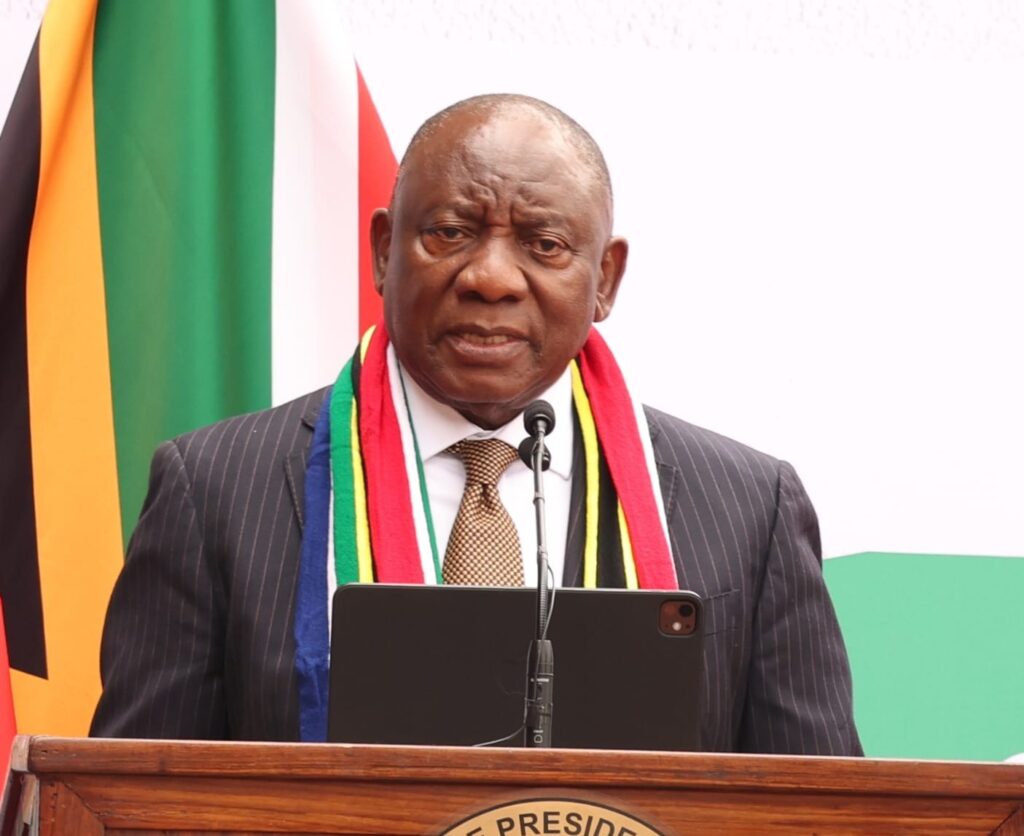
President Cyril Ramaphosa has launched the Milestones of Freedom programme today at the Union Buildings in Tshwane. He said the initiative will see South Africans reflect on their democratic journey over the coming year while renewing efforts to address poverty, unemployment and inequality.
Ramaphosa said the programme is intended to honour the country’s history while reinforcing the need to complete the work of building a just and inclusive society.
“It is a profound honour to stand before you today to launch the Milestones of Freedom programme,” he said.
Ramaphosa said the initiative brings together four key anniversaries that define South Africa’s liberation story. These include the 1956 Women’s March, forced removals under apartheid, the 1976 Soweto student uprising and the adoption of the democratic Constitution in 1996.
He paid tribute to the women who marched to the Union Buildings in 1956, describing their protest against pass laws as a defining moment in the struggle for freedom.
“They came to say to the apartheid state, in a single defiant voice, that they would not carry the hated dompas,” he said.
“They stood in silence for thirty minutes. And then they sang the words that have echoed through the decades: Wathint’ abafazi, wathint’ imbokodo. You strike the women, you strike a rock.”
He also honoured leaders of the march, including Lilian Ngoyi, Helen Joseph, Rahima Moosa and Sophie De Bruyn, alongside thousands whose names were not recorded.
Ramaphosa reflected on forced removals, including the destruction of District Six, where more than 60,000 people were displaced under apartheid. He said similar removals affected Sophiatown and Cato Manor.
On the 1976 Soweto uprising, he said young people changed the course of the country’s history through resistance to apartheid education policies.
“Their peaceful protest was answered with teargas, bullets, arrest and torture,” he said.
He added that the youth of 1976 showed that systems built on injustice cannot endure, and stressed that young people remain central to shaping the country’s future.
Ramaphosa also marked the adoption of the 1996 Constitution, describing it as the foundation of democracy rooted in equality, dignity and unity in diversity.
He said the milestones should also serve as a reminder of unfinished work, pointing to ongoing challenges of unemployment, poverty, crime and inequality.
He highlighted progress since 1994, including expanded access to electricity, water, housing, healthcare and education.
Ramaphosa said government is focused on building an inclusive economy by removing barriers to investment, strengthening energy supply, rebuilding ports and rail networks, and supporting small businesses.
He also stressed efforts to expand education and skills development, improve healthcare access and ensure quality services are not determined by a person’s ability to pay.
On governance, he said government is rebuilding law enforcement institutions and intensifying the fight against corruption.
“We are pursuing those who stole from the people, because money looted through corruption is money taken from a clinic, a classroom, a child,” he said.
Ramaphosa called on South Africans to take an active role in nation building through volunteering, civic participation and democratic engagement, including voter registration and participation in the National Dialogue.
He said the country’s progress depends on collective effort.
“We are the inheritors of their courage. We are the keepers of their dream,” he said.
Minister in the Presidency Khumbudzo Ntshavheni reflected on South Africa’s shared history during the launch.
She said these events continue to shape the country’s direction. She added that they guide policy, strengthen unity and support democratic resilience for all South Africans.