Yasmin Bilal
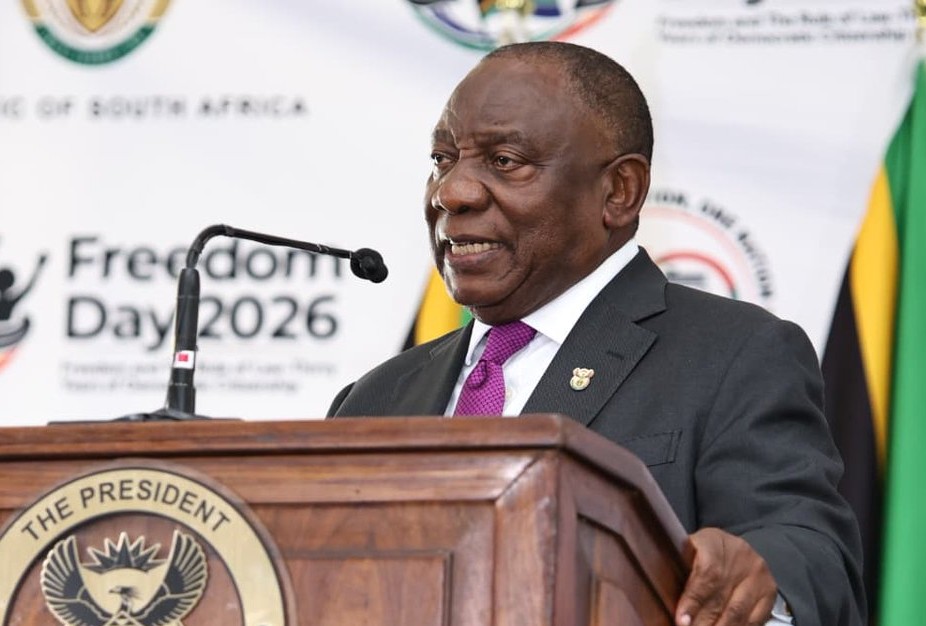
President Cyril Ramaphosa told Parliament that South Africa’s Constitution remains the foundation of democracy. Speaking during the Presidency Budget Vote in the National Assembly in Cape Town today, he said government is intensifying reforms to drive growth, improve service delivery and strengthen the state.
He said the Presidency serves as the strategic centre of government, responsible for coordination, oversight and ensuring implementation across all spheres of the state.
Its role is to drive inclusive growth, job creation, reduce poverty and the cost of living, and build a capable, ethical and developmental state. He described the Constitution as a national covenant that reflects South Africans’ aspirations for a responsive and accountable government.
He welcomed the establishment of the National Assembly Committee on the Presidency, saying it strengthens oversight, transparency and accountability.
On the economy, Ramaphosa pointed to signs of recovery, including improved macroeconomic stability, stronger tax revenues and stabilising public finances. He cited credit outlook improvements by Moody’s and S&P as evidence of renewed investor confidence.
“Government continues to coordinate the national investment drive, including the 6th South Africa Investment Conference, which secured more than R890 billion in pledges, with strong domestic participation” said Ramaphosa. He also stressed that local investor confidence remains vital as international investors follow domestic sentiment.
Economic growth, he said, must translate into jobs and improved livelihoods.
A major infrastructure programme worth about R1 trillion over three years is underway, covering roads, dams, schools, hospitals, clinics, energy, logistics and transport systems.
“Trade links are also being expanded across Africa, the European Union, the United States and China, while export markets are diversified. Support continues for key sectors under pressure, including automotive, cement and steel,” Ramaphosa added.
Energy progress was highlighted, with South Africa now over a year without load shedding, supported by coordinated work under the National Energy Crisis Committee involving Eskom, government and partners. Eskom’s performance has improved, and new generation capacity, including renewables, is being added. Work continues to address municipal load reduction.
Transport and logistics improvements under the National Logistics Crisis Committee are easing bottlenecks in mining, agriculture and manufacturing. Agriculture grew export earnings by 11 per cent, while South Africa is now the world’s largest citrus exporter.
Tourism reached a record 10.5 million arrivals last year, with further growth in the first quarter.
Ramaphosa warned that global instability and geopolitical tensions have triggered an oil price shock, with risks to inflation, growth and jobs. Employment has also declined in recent Stats SA figures, reinforcing the need for faster reforms.
He said crime and corruption remain priorities, with law enforcement institutions being rebuilt. He said the State Capture Commission plan is 80 per cent complete, with recoveries exceeding R17 billion. Ten new Acts have been passed, and whistleblower protection reforms are being strengthened.
Ramaphosa also said gender-based violence has been declared a national disaster, while migration, water reform, and local government failures are being addressed through new plans and interventions. He said urgent priorities remain jobs, governance and service delivery, urging faster implementation across all sectors.