Yasmin Bilal
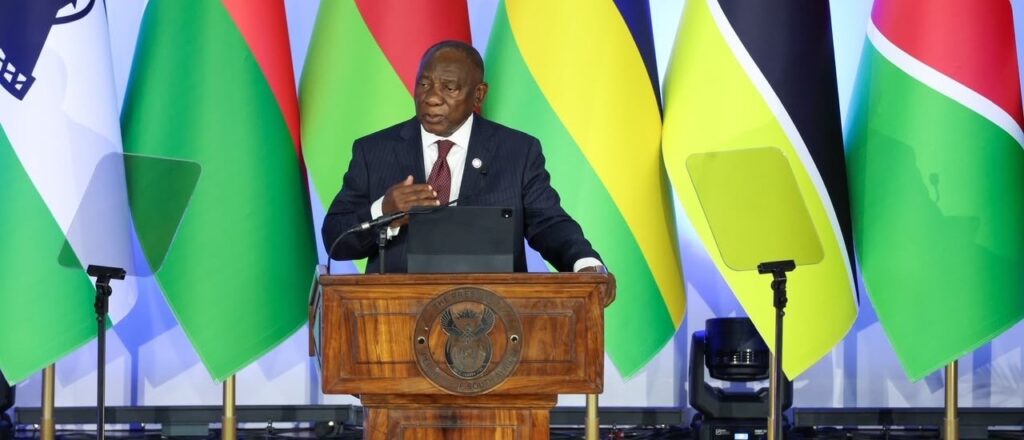
President Cyril Ramaphosa has challenged Southern African countries to reduce their reliance on outside markets and use the region’s own resources to drive growth, jobs and industrialisation.
Ramaphosa is delivering the keynote address at a SADC public lecture at the University of KwaZulu-Natal today, ahead of the 46th SADC Summit.
He said SADC had the resources and capabilities to build a stronger regional economy.
“SADC is the instrument through which we can bring these capabilities together,” Ramaphosa said.
The President pointed to progress made through the SADC free trade area, the Southern African Power Pool and one stop border posts.
But he said regional trade remained too low.
Trade between SADC states accounts for just under a quarter of the region’s combined total trade, according to Ramaphosa.
He said the region needed to make better use of its own market instead of relying heavily on distant economies.
“A regional market is an advantage that we ourselves own. Others cannot take it away from us.”
Ramaphosa also aimed the continued export of raw minerals.
Southern Africa has significant critical mineral resources needed for the global energy transition. Yet much of the region’s mineral wealth is still exported in raw form.
“We need to use our own resources to drive our own industrial revolution,” he said.
He called for investment in refining, smelting, electricity generation, transport infrastructure and cross-border water projects.
The President also identified pharmaceuticals, automotive manufacturing, agro processing and technology as areas where stronger regional value chains could support industrialisation.
On healthcare, he said the region should produce more of its own medicines.
“We can no longer accept that we import almost everything that heals us,” Ramaphosa said.
Transport corridors must also become stronger links between economies, he said.
Ramaphosa highlighted the Maputo, North South, Trans Kalahari, Beira and Lobito corridors.
“These corridors must carry power, data and people,” he said.
He also called for greater digital integration, including seamless payments and lower remittance costs.
Ramaphosa warned that the region was repeating old patterns in the digital economy.
“We are exporting data and importing intelligence,” he said.
He called for investment in computing capacity, connectivity and digital skills.
Agriculture was another priority.
Ramaphosa called for modern irrigation, climate-suitable seeds, improved veterinary science and stronger agro-processing.
He said small and medium-sized businesses would be central to regional industrialisation.
“This matters most of all to women and to young people,” he said.
Ramaphosa said more than half of SADC’s population is under 30.
He described the young population as a major strategic asset, but warned that youth unemployment posed a serious threat to regional stability.
“Youth unemployment is one of the gravest threats to the stability, cohesion and progress of every country in our Community,” Ramaphosa said.
He also addressed healthcare, gender based violence, migration, peace and climate change.
On migration, he called for a region where people could move by choice rather than desperation.
“We seek a region where people move out of choice, not out of desperation,” Ramaphosa said.
He described the conflict in the eastern Democratic Republic of Congo as a major test for SADC.
He also paid tribute to regional soldiers who lost their lives while supporting peace efforts.
Climate change was another concern.
Ramaphosa warned that droughts, floods and cyclones were putting pressure on food security, infrastructure and livelihoods.
He called for stronger regional disaster preparedness and faster collective responses.
Ntshavheni calls for action
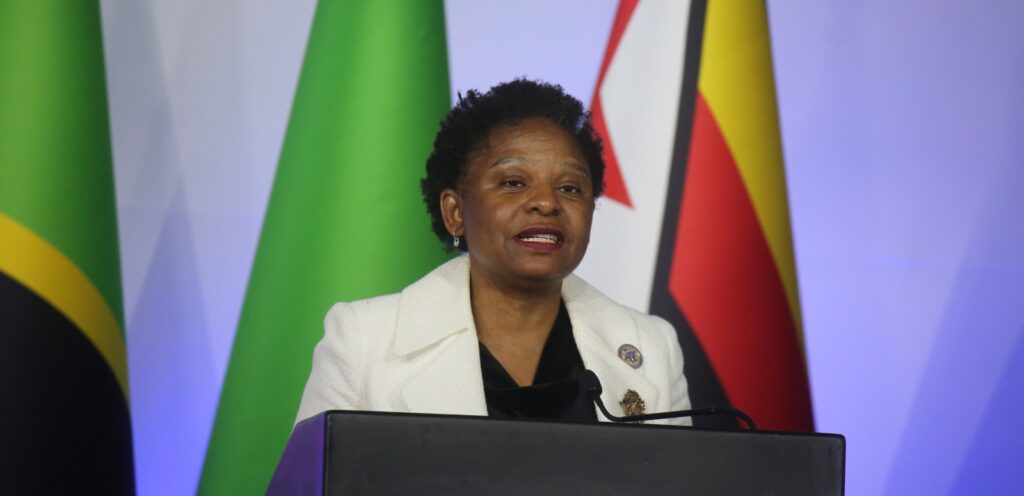
Minister Khumbudzo Ntshavheni opened the programme by warning that SADC Vision 2050 must move beyond policy commitments.
“SADC is not simply an institutional arrangement between governments. At its heart, SADC is about people,” Ntshavheni said.
She said regional integration should improve access to education, decent work, affordable energy and reliable connectivity.
She also highlighted the needs of farmers, entrepreneurs and communities.
Ntshavheni said the key question was how to turn Vision 2050 into action.
“But the question before us is no longer simply whether we have the right vision. The question is: how do we translate that vision into action?”
She highlighted unemployment, inequality, food and energy insecurity, infrastructure deficits and climate change as major challenges.
She also called for greater opportunities for women, young people and rural communities.
Ntshavheni said citizens must be able to experience the benefits of regional integration.
“Our task today is therefore not simply to celebrate Vision 2050. It is to interrogate it, strengthen it and, most importantly, consider how we can accelerate its implementation.”
Lamola warns of global pressure
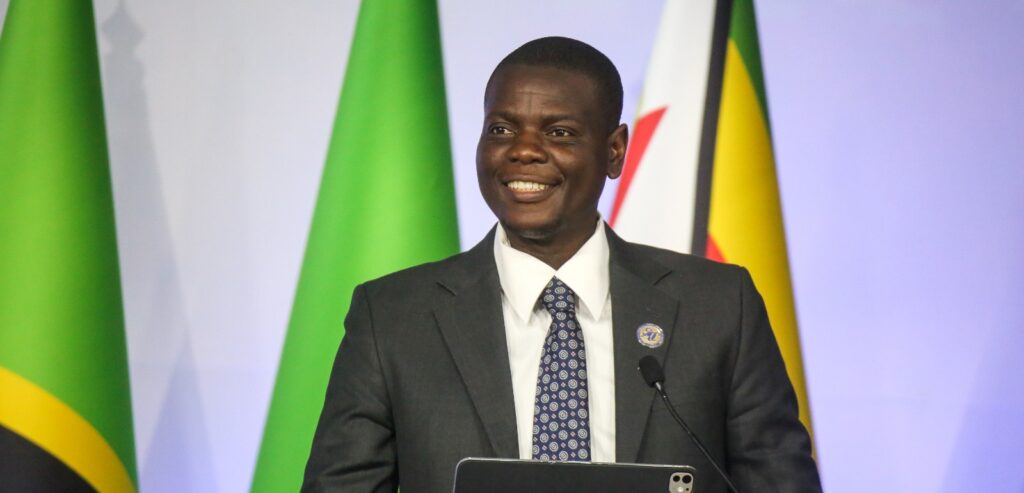
International Relations and Cooperation Minister Ronald Lamola introduced Ramaphosa at the lecture.
Lamola warned that global power competition and economic instability were putting pressure on the region.
He said developments beyond Southern Africa were affecting food and energy security, jobs and livelihoods.
“Trade is weaponised to punish countries that don’t toe the line. Competition for Africa’s mineral wealth is prompting talk of another scramble for Africa,” Lamola said.
He said the region needed to strengthen its efforts to build a peaceful, inclusive and industrialised SADC.
Lamola also praised Ramaphosa’s role in the struggle against apartheid and his support for African solidarity and dialogue.
He said the President had advocated for greater African representation in global governance and African-led responses to major challenges.
“As narrow nationalism rises and some quarters rail against international cooperation and solidarity, his vision and leadership are critical,” Lamola said.
He described Ramaphosa as a leader bringing “history, experience and conviction” to the region’s next chapter.