Yasmin Bilal
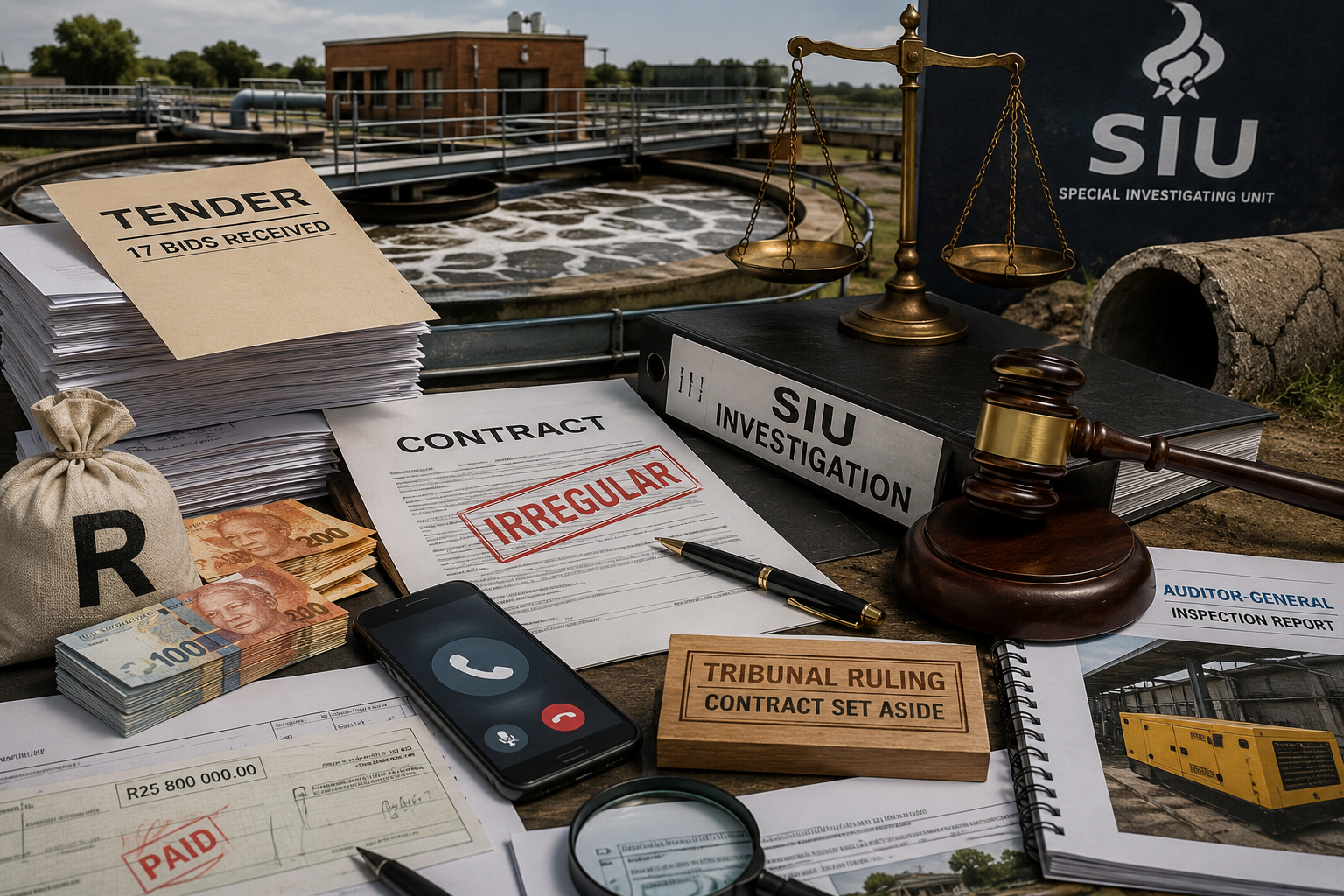
The Special Investigating Unit (SIU) has welcomed a Special Tribunal ruling that set aside an unlawful R25.8 million wastewater treatment contract in Ditsobotla Local Municipality.
The contract was awarded to Rensh Close Corporation after a single phone call from a municipal technical director. This occurred despite an earlier tender process that attracted 17 bids.
The Tribunal ordered Rensh Close Corporation, owned by Rashida Cader, to repay all funds owed to the municipality. This includes any profits made from the contract. Cader was also held personally liable for the municipality’s losses.
The ruling follows an SIU investigation initiated after a referral from the Auditor-General of South Africa (AGSA).
Investigators found that Themak Consulting Civil Engineering Consultancy was appointed in November 2019 to assess the municipality’s wastewater infrastructure. The company, owned by Edwin Andries Hapi Makola, produced a technical report and bill of quantities valued at R36.9 million.
The Tribunal ordered Themak and Makola to repay R3.88 million received for consultancy services, plus interest.
According to the SIU, the municipality had advertised a tender for emergency refurbishment work in November 2019. About 17 bids were received.
However, in March 2020, a municipal technical director allegedly contacted Cader by phone and requested a quotation. Rensh later submitted a quote of R25.8 million, despite not having participated in the original tender process.
The SIU found that the municipality abandoned the formal tender process. It then relied on COVID-19 emergency procurement regulations to appoint Rensh.
Investigators said no valid written contract or appointment letter could be produced. The municipality nevertheless paid R25.8 million to Rensh in May 2020, even though the work had not been completed.
AGSA inspections identified more than R4.3 million in payments that could not be verified on site. The investigation also found discrepancies linked to diesel generators supplied under the contract.
The SIU said the evidence points to possible collusion between municipal officials and service providers.
Judge Mashile said it was concerning that residents remained in the same “unendurable and disadvantaged situation” despite millions being spent on the project.
The SIU has referred evidence of possible criminal conduct to the National Prosecuting Authority for further action.