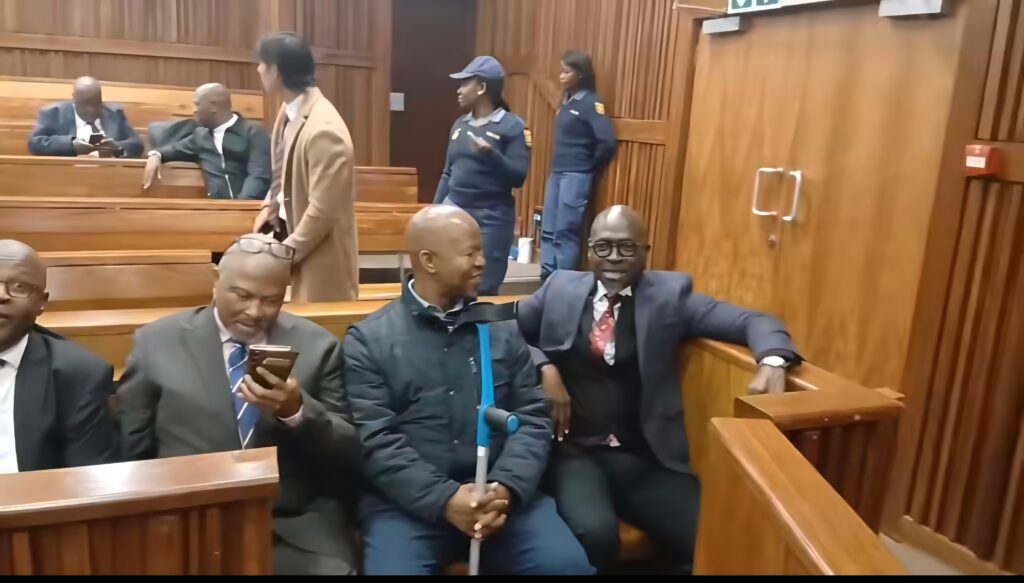
Former Transnet executives’ corruption case heard at the Gauteng Division of the High Court. Pic SC
Thokozile Mnguni
The corruption case involving former Finance Minister Dr Malusi Gigaba and former senior Transnet executives has been postponed at the Gauteng Division of the High Court in Johannesburg.
The postponement will allow for further consultations and the finalisation of trial timelines.
The accused include Gigaba, former Transnet Group Chief Financial Officer Anoj Singh, former Group Chief Executive Officer Brian Molefe, former Chief Executive Officer Siyabonga Gama and former Chief Procurement Officer Thamsanqa Jiyane.
The matter appeared before the High Court today. It was postponed to 10 July for consultations between the State and the accused’s legal representatives.
According to the Investigating Directorate Against Corruption, spokesperson Henry Mamothame said the consultations will focus on comparing the docket disclosed by the National Prosecuting Authority’s IDAC unit. The court ordered that the process must be completed before 30 July 2026.
The State and defence teams also agreed to submit a formal timeline to the court by 15 May 2026. The submission will outline pre-trial processes, including possible applications for further particulars. It will also assist in setting trial dates.
The accused face charges linked to alleged corruption during Transnet’s multi-billion rand locomotive acquisition programme. The programme was aimed at expanding and modernising South Africa’s rail infrastructure.
The State alleges that tender processes were flouted during the period. It further claims that three major contracts were irregularly awarded for the supply of 95, 100 and 1 064 locomotives. These contracts form the basis of the charges against the accused.
It is further alleged that the irregular procurement processes caused financial losses amounting to billions of rand for Transnet, the state-owned freight and rail logistics company.
The matter forms part of broader state capture-related investigations into procurement practices at key state-owned entities.