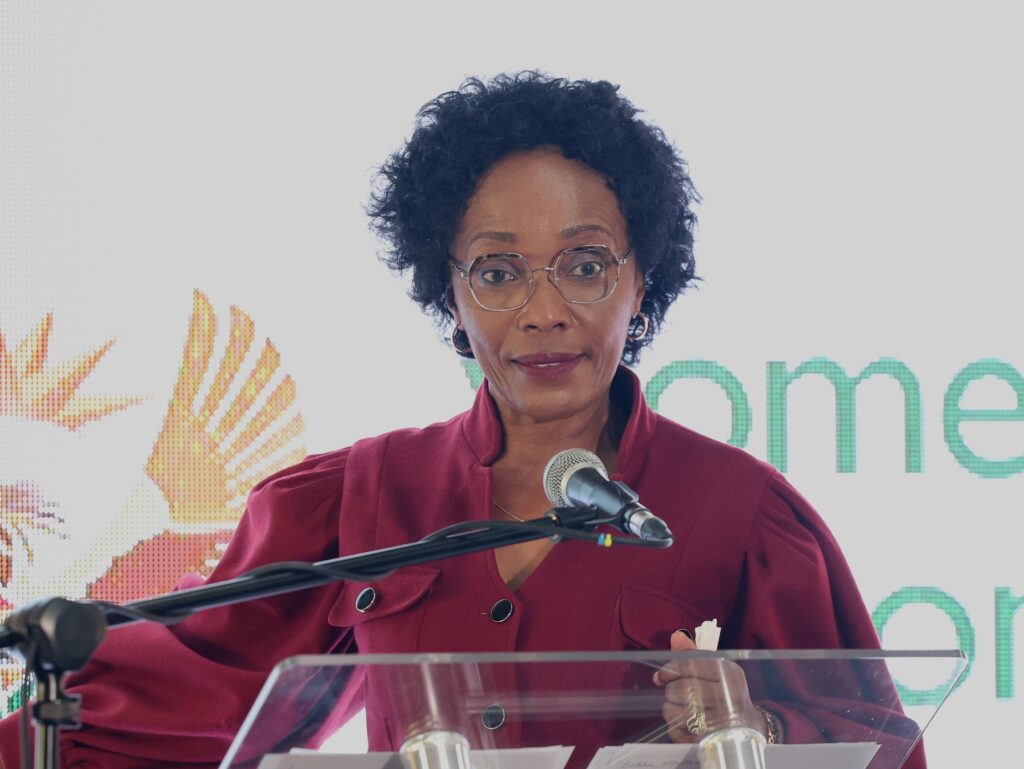
Thokozile Mnguni
Minister in the Presidency for Women, Youth and Persons with Disabilities Sindisiwe Chikunga has called for urgent action to address violence against women and economic exclusion.
She was speaking at the launch of the Platinum Jubilee of the 1956 Women’s March at Freedom Park in Tshwane today.
Chikunga said the programme will run for a year and marks a defining moment in South Africa’s democracy and the long struggle for women’s freedom.
According to Chikunga, the country is experiencing a rare convergence of historical milestones.
“This year gives us a rare convergence of history,” she said. “As a nation, we commemorate 70 years since the 1956 Women’s March.”
“We also mark 50 years since the 1976 Youth Uprisings. Young people rose against Bantu Education. They reshaped the course of our struggle,” she added.
“We also mark 30 years since the adoption of our democratic Constitution. It carries the promise of equality. It carries dignity, freedom and non-sexism.”
Chikunga said the spirit of the 1956 march did not end at the Union Buildings but continued through the decades that followed.
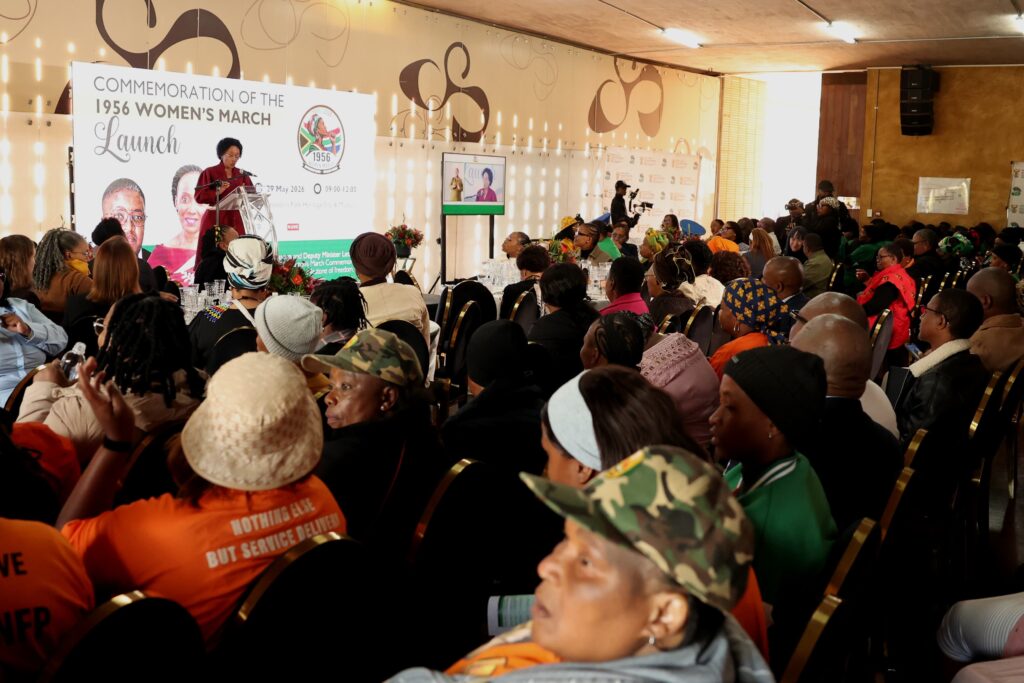
The movement was carried forward by women organising under increasingly difficult conditions.
“The road from 1956 to 1994 was not only a road to political democracy,” she said.
“It was also a road towards recognising women as full citizens, full leaders and full makers of the South Africa we continue to build today.”
Chikunga stressed that the struggle for women’s emancipation is not complete and that challenges such as gender-based violence and economic exclusion must still be confronted.
She said protecting women means protecting the nation.
“As we commemorate 70 years since 1956, we celebrate the progress of democracy,” she said. “But we do not declare the work complete.”
“The task before us is to move from formal equality to lived equality. From representation to real power. From policy commitments to measurable change.”