Yasmin Bilal
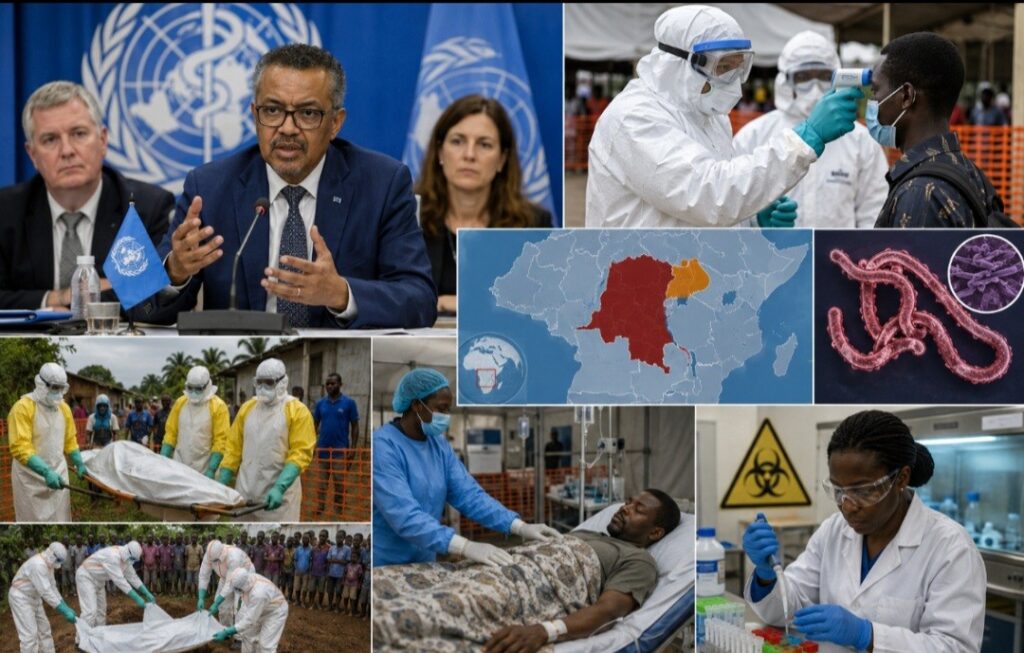
The World Health Organisation (WHO) has declared an outbreak of Ebola disease caused by the Bundibugyo virus in the Democratic Republic of the Congo and Uganda a Public Health Emergency of International Concern (PHEIC), citing evidence of cross-border transmission and rising case numbers.
The decision follows consultations with health authorities in both countries, where infections have been confirmed in multiple locations, including Kampala and the conflict-affected Ituri Province.
According to WHO, as of 16 May 2026, eight laboratory-confirmed cases, 246 suspected infections and 80 suspected deaths have been recorded in Ituri. In Uganda, two confirmed cases have been identified in Kampala, both linked to recent travel from the Democratic Republic of the Congo. A separate suspected case in Kinshasa was later ruled out after confirmatory testing.
The UN health agency described the situation as “extraordinary”, citing the scale of transmission, a high number of unexplained community deaths, and possible spread within healthcare settings. At least four healthcare workers have reportedly died with symptoms consistent with viral haemorrhagic fever, raising concerns over infection prevention and control measures.
WHO Director-General Dr Tedros Adhanom Ghebreyesus said the outbreak meets the criteria for a PHEIC under the International Health Regulations, but does not currently constitute a pandemic emergency. He praised both governments for their transparency and rapid reporting, saying early information sharing is critical for global preparedness.
The organisation warned that the true extent of the outbreak may be significantly larger than reported, citing a high positivity rate in early testing and increasing reports of community deaths. It also highlighted insecurity, population movement, and limited healthcare capacity as key factors increasing the risk of wider spread.
Unlike other Ebola strains, WHO noted there are currently no approved vaccines or specific treatments for Bundibugyo virus disease, heightening concern among health experts.
The agency has called for urgent coordination measures, including strengthened surveillance, expanded laboratory testing, improved infection prevention in hospitals, and enhanced contact tracing. It also urged countries in the region to activate emergency operations centres and prepare cross-border response plans.
International travel restrictions are not recommended at this stage. However, WHO has advised screening at border points, monitoring of contacts, strict isolation of confirmed cases, safe burial practices, and stronger community engagement to prevent further transmission.
An Emergency Committee will be convened in the coming days to issue further guidance and temporary recommendations for affected states.