Noko Mashilo
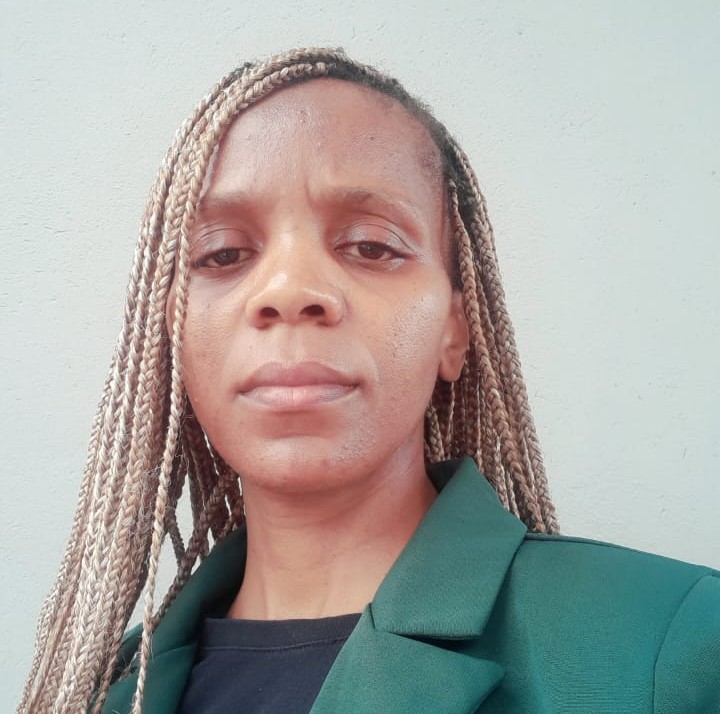
For many broadcasters, the journey begins with a dream of being behind the microphone. But for Maleshoane Banyana wa ga Letsoalo, the microphone found her before she ever went looking for it.
At 37, the Thobela FM news anchor has built a career behind the microphone she never imagined would become her professional home. Broadcasting was not part of her original plan.
Her ambition was to become a government communicator, using her voice and skills to build communities and strengthen communication between government and the people. But life had a different script.
It eventually placed her behind a microphone and gave her a voice heard by thousands of Sepedi-speaking listeners.
Today, her voice is part of the morning routine of thousands of listeners. Through Hlokwa la Tsela, she presents the latest news and conversations from 5 am to 6 am, Monday to Friday, and from 6 am to 7 am on weekends.
Born and raised in Mzimhlophe, Soweto, Johannesburg, Letsoalo’s broadcasting journey began after completing her studies and applying for experiential learning at the South African Broadcasting Corporation in Auckland Park.
She was accepted into the SABC internship programme and placed in the Polokwane region. What began as workplace experience eventually opened the door to a career in broadcasting.
Letsoalo joined Thobela FM as an intern in 2013. After completing her training, she left to explore other opportunities and later joined the public sector.
Six years later, she returned to the SABC, rejoining Thobela FM in 2019.
Looking back, she believes her return was part of a journey that was always meant to happen.
“I was placed in this fraternity by the divine power and my guardian angels,” she said.
For Letsoalo, being a Thobela FM news anchor is about much more than presenting Hlokwa la Tsela.
The station has a long-standing relationship with Sepedi-speaking communities. Its audience includes academics, professionals, broadcasters and ordinary listeners.
She understands the responsibility that comes with that legacy.
“It really means a lot to me that I am one of those entrusted with such a huge task and having to step into these big shoes because of its rich history of excellent broadcasters who paved the way for us and those that are still at it, teaching us to date,” she said.
Knowing that listeners wake up to her voice every day can be both an honour and a source of pressure.
“The fact that people wake up to hear my voice every day makes me nervous,” she admitted.
But she has learnt to embrace the pressure. For Letsoalo, good journalism starts with curiosity.
She describes herself as a “curious cat”. She is constantly reading, researching and engaging with fellow broadcasters and communities.
“Each story I do day in, day out, I treat as a new subject or topic before I can pan out which angle would be best suited to pursuing it further,” she explained.
She does not identify one particular story as her most challenging assignment. Instead, she believes every story presents its own demands because journalism involves seeking accountability on behalf of the public.
“Every story is a challenge because it involves seeking accountability on behalf of the masses,” she said.
One lesson she has learnt is not to be too hard on herself when a story does not go according to plan.
Instead, she regroups, restructures her questions and changes her approach.
Letsoalo also believes indigenous-language broadcasting remains critical to ensuring people receive information in languages they understand.
She sees the SABC as an important custodian of indigenous languages.
The digital revolution is meanwhile transforming journalism through social media, podcasts and artificial intelligence. But Letsoalo warns against allowing the race for numbers to undermine journalistic standards.
“The only disadvantage about those platforms is they chase numbers,” she said. She warned that some content lacks adequate fact-checking and research and can become “plagued by sensationalism or tabloid-like reporting style.”
She believes technology should never replace the fundamentals of journalism.
Young journalists also face challenges around media freedom, accountability and access to newsmakers.
Letsoalo says journalists can be accused of conducting a witch hunt when they pursue difficult questions.
Getting a right of reply can also be difficult, with some newsmakers agreeing to interviews only to withdraw at the last minute.
She believes audiences should understand that journalists often exhaust every avenue to obtain answers before a story is broadcast.
Her message to young people, particularly those from rural and township communities, is simple.
“Follow your dreams, read, ask questions and stay humble. God will do the rest,” Letsoalo said.
Letsoalo is not obsessed with awards.
“Hopefully one day,” she said, while stressing that she considers herself a public servant regardless of whether she receives a trophy.
“Ours is to make a difference in our communities, tell and capture our stories. History will speak for itself,” she said.